A pivotal shift in U.S. AI policy promises to accelerate innovation, but raises new questions about safety and oversight.
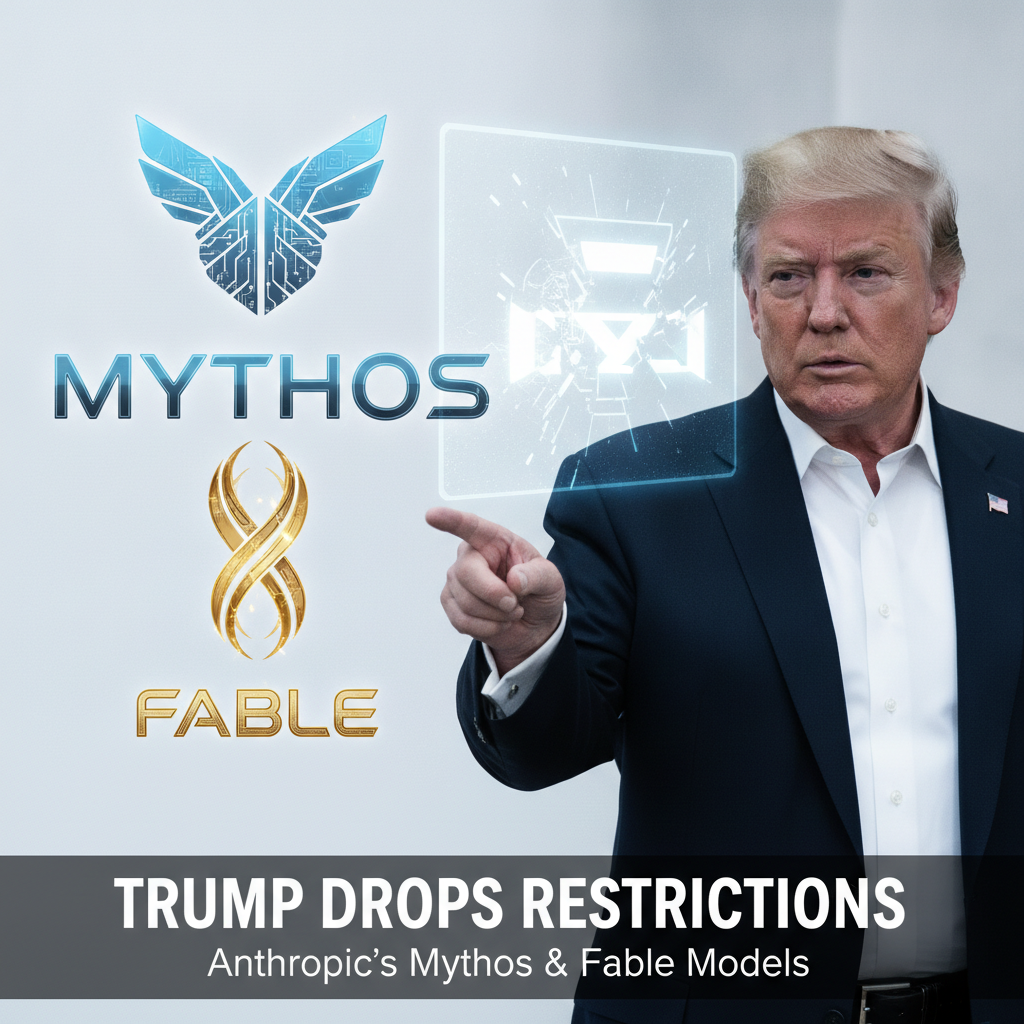
WASHINGTON D.C. – June 30, 2026 – In a move that sent immediate ripples across Silicon Valley and global tech markets, President Donald J. Trump today announced the immediate lifting of several key federal restrictions on Anthropic’s highly anticipated frontier AI models, Mythos and Fable. The decision, unveiled during a surprise press conference at the White House, signals a dramatic reorientation of U.S. AI policy, prioritizing rapid innovation and American competitiveness above the more cautious, regulatory approach of previous administrations.
A New Era for Anthropic and AI Innovation
For months, the AI community has speculated about the capabilities of Anthropic’s next-generation models, Mythos and Fable, rumored to significantly surpass existing benchmarks in reasoning, multimodal understanding, and complex problem-solving. However, their development and potential deployment have been subject to stringent federal oversight, including limitations on compute access, data utilization, and specific export controls, driven by concerns over national security, dual-use capabilities, and the broader societal impact of advanced AI. These restrictions were largely a legacy of the previous administration’s push for responsible AI development and international collaboration on safety protocols.
President Trump stated that these restrictions were “unnecessary burdens” that stifled American ingenuity and threatened the nation’s lead in the global AI race. “We cannot allow bureaucratic red tape to hamstring our brightest minds and slow down the progress that will define the 21st century,” the President declared. “With Mythos and Fable, Anthropic has the potential to unleash unprecedented innovation, create countless jobs, and secure America’s dominance in artificial intelligence. We are cutting the chains and letting American genius fly.”
Unraveling the Restrictions and Their Impact
While the full details of the lifted restrictions are still emerging, preliminary reports suggest they include:
- Reduced Export Controls: Easing limitations on the deployment and accessibility of Mythos and Fable to allied nations and specific international research partners.
- Streamlined Computational Access: Removing bottlenecks on high-performance computing resources, allowing Anthropic to scale training and inference more rapidly.
- Relaxed Deployment Safeguards: Potentially reducing federally mandated pre-deployment testing and ethical review protocols for certain applications, shifting more responsibility to Anthropic itself.
- Expanded Data Utilization: Granting broader access to datasets previously deemed sensitive or restricted for AI training.
For Anthropic, a company renowned for its commitment to AI safety and Constitutional AI, this move presents both immense opportunities and significant challenges. The lifting of these federal guardrails could dramatically accelerate the commercialization and widespread adoption of Mythos and Fable, giving Anthropic a powerful competitive edge against rivals like OpenAI, Google DeepMind, and Meta AI. Investors reacted positively, with Anthropic’s valuation seeing an immediate uptick in pre-market trading.
The Balancing Act: Innovation Versus Safety
The decision immediately ignited a fervent debate among AI ethicists, policymakers, and industry leaders. Proponents, primarily from the tech industry and libertarian think tanks, lauded the move as a necessary step to unleash American innovation and ensure the U.S. remains at the forefront of the AI revolution. “This is about empowering our world-class researchers and engineers to build the future without unnecessary government overreach,” commented a spokesperson for the National Venture Capital Association.
However, critics expressed deep concerns. Dr. Anya Sharma, a leading AI safety researcher at Georgetown University, warned, “While innovation is vital, speeding up the deployment of frontier AI models without robust, independent oversight could have unforeseen and potentially dangerous consequences. Anthropic’s internal safety mechanisms are commendable, but the stakes are too high to rely solely on self-regulation, especially with models of Mythos and Fable’s rumored power.” Concerns range from potential misuse in autonomous weapons systems and sophisticated disinformation campaigns to algorithmic bias and job displacement at an accelerated rate.
Global Implications and the Race for AI Leadership
This policy shift is expected to reverberate globally, potentially putting pressure on other nations to re-evaluate their own AI regulatory frameworks. Countries like China and the European Union, which have pursued more stringent approaches to AI governance, will be closely watching the outcomes of this American experiment. The move could spark an intensified global AI arms race, not just in terms of technological capability but also in policy approaches to manage its development.
As Anthropic gears up to fully leverage this newfound freedom, the eyes of the world will be on Mythos and Fable. How will the company balance its mission for safe and beneficial AI with the intense pressure to deploy and scale rapidly? The coming months will be a crucial test, not just for Anthropic, but for the very future of U.S. leadership in AI.
What Next?
The Trump administration’s bold bet on unrestricted AI development marks a decisive turn. While the promise of accelerated innovation is enticing, the ethical and societal challenges remain paramount. The saga of Anthropic’s Mythos and Fable models is now more than just a story of technological advancement; it’s a real-time case study in the complex interplay between government policy, corporate responsibility, and the rapid evolution of artificial intelligence.
Leave a Reply