
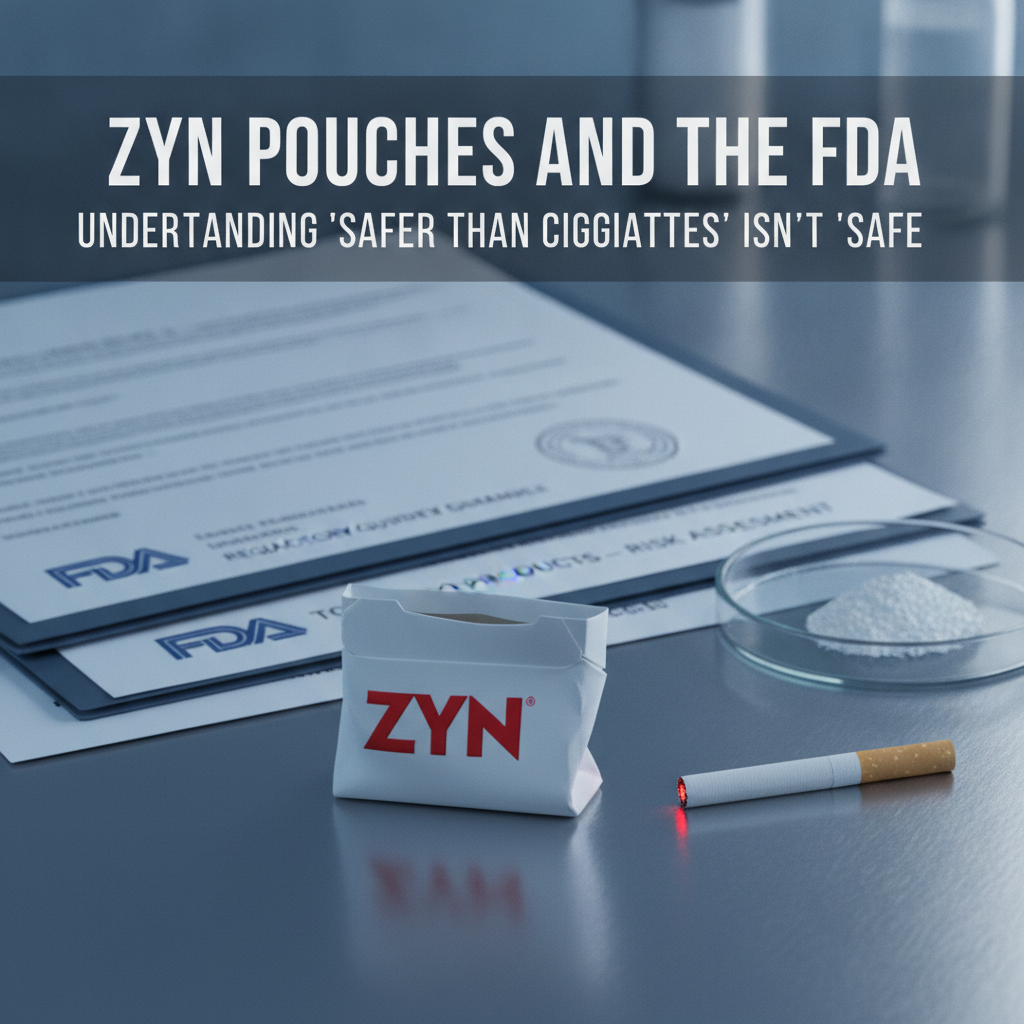
The recent FDA ruling on ZYN nicotine pouches has ignited significant discussion and, for many, confusion. When the Food and Drug Administration declares a product to be “safer than cigarettes,” it naturally grabs headlines and attention. But as with most public health matters, the full picture is more nuanced than the soundbite suggests. While ZYN has indeed received a special designation, it’s crucial to understand precisely what this means – and what it doesn’t.
This post aims to demystify the FDA’s decision, explore the implications of ZYN’s classification, and provide a balanced perspective on these popular tobacco-free nicotine pouches. Because while being ‘safer’ than one of the deadliest consumer products is a low bar, it’s far from an endorsement of absolute safety.
The FDA’s Groundbreaking (But Misunderstood) Ruling
The core of the FDA’s decision lies in its authorization of specific ZYN products as Modified Risk Tobacco Products (MRTPs). This designation allows Swedish Match, ZYN’s manufacturer, to market these products with claims that they present a lower risk of certain diseases than traditional combustible cigarettes.
To achieve MRTP status, manufacturers must submit extensive scientific evidence demonstrating that their product significantly reduces harm or the risk of disease, and that allowing it to be marketed with such claims would be appropriate for the protection of public health. This isn’t a blanket approval of safety, but rather a judgment of relative risk when compared to the well-documented dangers of smoking.
- What it means: The FDA acknowledges that using ZYN pouches instead of cigarettes exposes users to fewer harmful chemicals.
- What it doesn’t mean: It does not mean ZYN is safe, risk-free, or a healthy alternative. It is safer *than cigarettes* for adult smokers who completely switch.
What Exactly Are ZYN Nicotine Pouches?
ZYN are a brand of tobacco-free nicotine pouches designed for oral use. Unlike traditional chewing tobacco or snus, ZYN pouches do not contain tobacco leaf. Instead, they contain pharmaceutical-grade nicotine, plant fiber, flavorings, and sweeteners. Users place a small pouch between their gum and lip, where nicotine is absorbed through the oral mucosa.
They come in various strengths and flavors, contributing to their growing popularity, particularly among younger adults and former smokers looking for alternatives.
“Safer Than Cigarettes” Is Not “Safe”: The Nuances You Need to Know
This is the critical distinction that often gets lost in translation. While the MRTP designation is a significant step in tobacco regulation and harm reduction, it comes with important caveats.
Nicotine Addiction Remains a Key Concern
Regardless of its delivery method, nicotine is highly addictive. ZYN pouches deliver nicotine, meaning they carry the significant risk of addiction. For current smokers who switch entirely, it may maintain their nicotine dependence. For non-smokers, particularly youth, it could introduce them to nicotine addiction, potentially leading to the use of other tobacco products.
Symptoms of nicotine addiction include intense cravings, withdrawal symptoms when not using, and difficulty cutting down or stopping use.
Unknown Long-Term Health Effects of ZYN Pouches
Because products like ZYN are relatively new to the market, the long-term health effects of ZYN pouches are not yet fully understood. While they eliminate many of the carcinogens found in tobacco smoke, questions remain about:
- The impact of long-term nicotine exposure on cardiovascular health.
- Potential effects on oral health, such as gum irritation or recession.
- The influence of various flavorings and other ingredients.
Ongoing research is crucial to fully assess the comprehensive health profile of these products.
A Gateway or an Off-Ramp? The Youth Appeal
A major public health concern with any new nicotine product is its potential appeal to youth and non-smokers. Flavored nicotine products, including ZYN, have seen a rise in popularity among adolescents. This raises fears that these products could serve as a gateway to other nicotine or tobacco products for a generation that might otherwise never have started using nicotine.
The FDA’s authorization comes with strict marketing restrictions to prevent targeting youth, but the broader cultural appeal remains a challenge for public health advocates.
Harm Reduction vs. Cessation: A Public Health Debate
The FDA’s decision on ZYN highlights a central tension in public health: harm reduction versus complete cessation. Harm reduction strategies aim to reduce the negative consequences of certain behaviors (like smoking) when outright cessation is not immediately achievable for everyone. For adult smokers unwilling or unable to quit nicotine entirely, switching to a significantly less harmful product like ZYN could save lives by preventing diseases caused by combustible tobacco.
However, public health bodies universally agree that the healthiest choice is always to be free from nicotine and all tobacco products. ZYN pouches are not a cessation device and should not be marketed as such. They are an alternative for adult smokers seeking to reduce their exposure to tobacco combustion by completely switching.
Making Informed Choices About ZYN Pouches
The FDA’s ruling on ZYN pouches marks a complex moment in tobacco regulation. It underscores the scientific reality that not all nicotine products are equally harmful. ZYN can be an important tool for adult smokers seeking to transition away from cigarettes, offering a path to significantly reduce their exposure to the toxic chemicals in smoke.
However, the label “safer than cigarettes” must never be misconstrued as “safe.” Nicotine addiction remains a serious concern, and the long-term health implications are still being studied. For those who do not use nicotine, the best choice for your health is to remain nicotine-free.
Understanding these distinctions empowers consumers to make truly informed decisions about their health and nicotine use, guided by science rather than marketing alone.
Leave a Reply