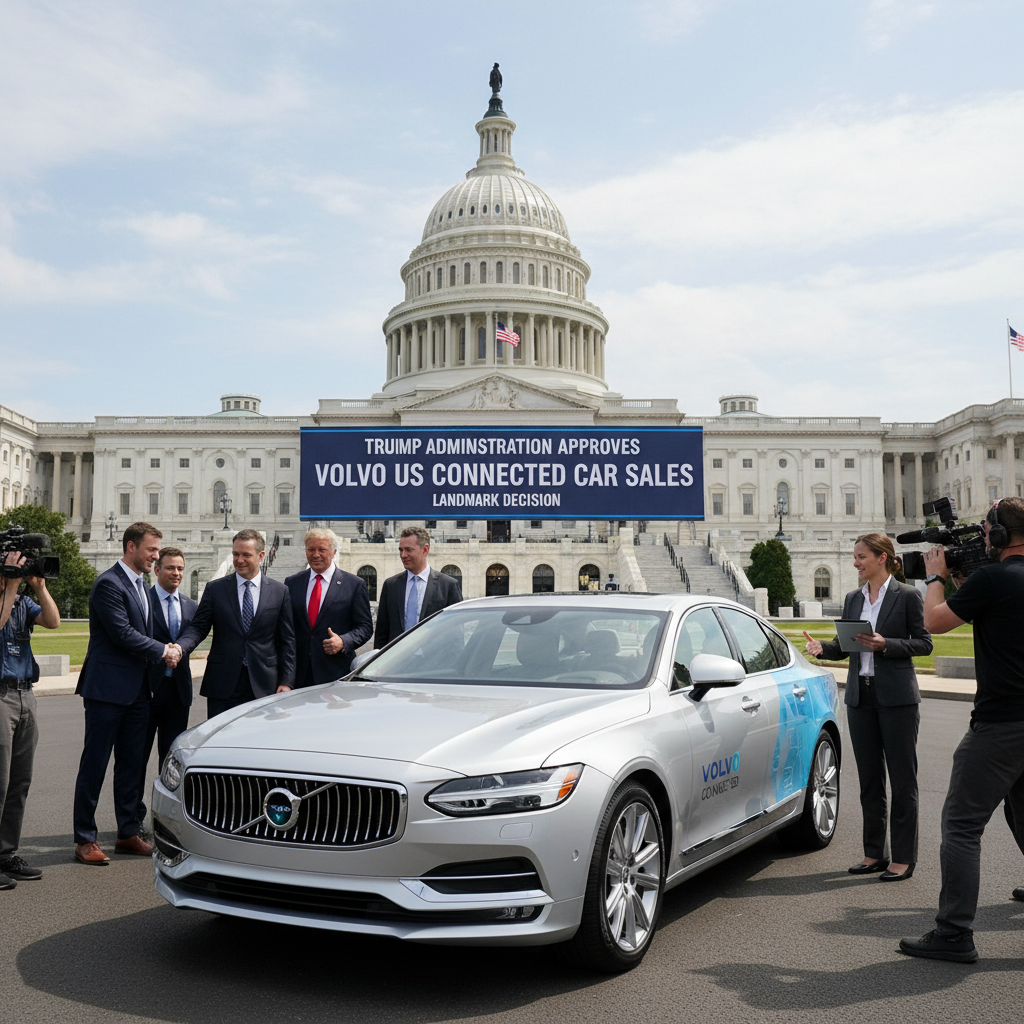
In a significant development for the automotive industry and the future of vehicle technology, the Trump administration has granted Volvo explicit permission to continue selling its connected cars in the United States. This decision, announced on May 26, 2026, provides crucial clarity for the Swedish automaker and underscores the complex interplay between technological innovation, national security, and international trade in an increasingly interconnected world.
The ruling comes amidst heightened scrutiny over data privacy, cybersecurity, and the origins of technology integrated into vehicles operating within U.S. borders. For Volvo, a company with deep roots in Sweden but owned by China’s Geely Holding Group, navigating this regulatory landscape has been a critical challenge as it pushes the boundaries of in-car connectivity and autonomous driving features.
A Green Light for Connectivity and Innovation
The Trump administration’s approval effectively removes a potential cloud of uncertainty that had loomed over Volvo’s ambitious plans for its connected vehicle ecosystem. These cars, equipped with advanced sensors, 5G capabilities, and sophisticated software, are designed to offer a range of services from real-time traffic updates and remote diagnostics to over-the-air software updates and enhanced safety features. The ability to collect and transmit vast amounts of data has, however, raised questions among policymakers regarding data security, potential for foreign surveillance, and compliance with evolving U.S. standards.
While the specifics of the permit or waiver were not immediately detailed, sources close to the negotiations suggest that Volvo provided extensive assurances regarding its data handling protocols, server locations, encryption standards, and supply chain integrity. This commitment to robust cybersecurity measures and transparent data governance appears to have been pivotal in securing the administration’s favor.
Implications for Volvo and the US Market
- Market Stability: The decision ensures Volvo’s continued access to the lucrative U.S. market, a critical region for the brand’s global sales and growth strategy.
- Innovation Momentum: It allows Volvo to proceed unhindered with its research and development in connected and autonomous vehicle technologies, maintaining its competitive edge.
- Brand Confidence: The explicit approval from the U.S. government bolsters consumer and investor confidence in Volvo’s connected car offerings, reinforcing its commitment to security and compliance.
- Precedent Setting: This ruling could establish a precedent for how other international automakers, particularly those with complex ownership structures or supply chains, will need to engage with U.S. regulatory bodies concerning advanced vehicle technologies.
Broader Industry Impact: A Roadmap for Connected Cars?
The administration’s decision on Volvo is likely to send ripple effects across the entire automotive sector. As vehicles become increasingly digitized, connected, and eventually autonomous, governments worldwide are grappling with how to regulate these rapidly evolving technologies without stifling innovation. This move by the Trump administration could be interpreted in several ways:
- Focus on Data Security: It highlights the paramount importance of cybersecurity and data privacy in the context of connected vehicles, urging all manufacturers to prioritize these aspects.
- Pathway for International Brands: For other foreign automakers, it signals that with sufficient transparency and adherence to U.S. security requirements, market access for advanced technologies is achievable.
- Regulatory Evolution: The decision underscores the dynamic nature of regulations surrounding new technologies, suggesting that governments are willing to adapt and create frameworks for innovation when national interests are adequately addressed.
- Investment Boost: The clarity provided could encourage further investment in the connected car ecosystem, from infrastructure providers to software developers, knowing that a path to market exists.
The Road Ahead: Challenges Remain
While a significant victory for Volvo, the broader challenges for connected cars and automotive technology are far from over. The ongoing debate surrounding 5G infrastructure, ethical AI in self-driving cars, and the ever-present threat of cyberattacks will continue to shape the regulatory environment. Future administrations and legislative bodies may introduce new requirements, necessitating continuous adaptation from automakers.
Volvo’s successful navigation of this regulatory hurdle serves as a testament to strategic engagement and a commitment to addressing governmental concerns head-on. As the automotive industry races towards a fully connected and autonomous future, this landmark decision by the Trump administration marks a crucial step in defining the rules of engagement for technology and trade in the 21st century.
Leave a Reply