
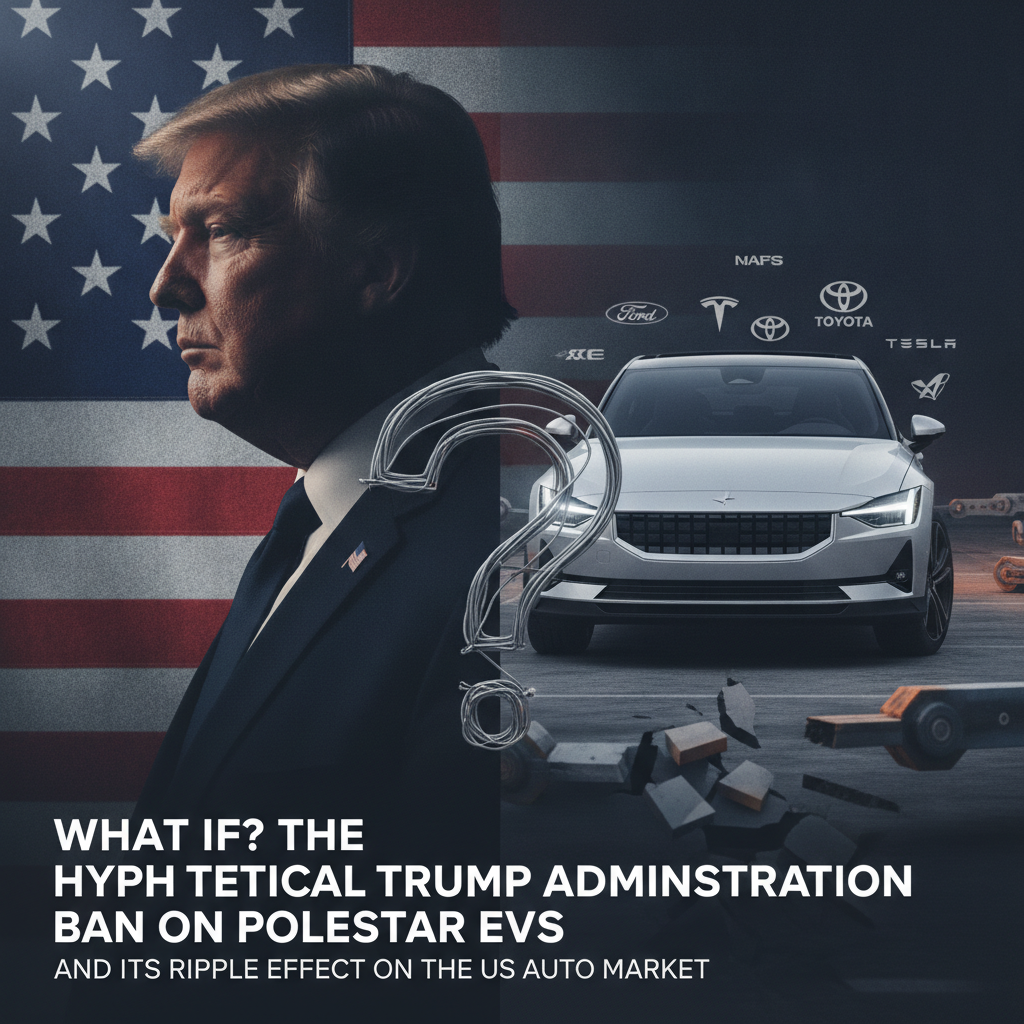
Imagine a scenario where the future of electric vehicle sales in the United States hangs precariously in the balance, shaped not just by consumer demand or technological innovation, but by geopolitical tensions and protectionist policies. While currently a hypothetical projection, a provocative TechCrunch URL from June 25, 2026, posits a future where a Trump administration bars Polestar from selling its new EVs in the US. This potential move, though speculative, opens a crucial discussion about trade policy, its impact on the automotive industry, and the evolving landscape of global commerce.
The Hypothetical Scenario: Why Polestar Could Be Targeted
The premise of a future Trump administration enacting such a ban is rooted in several potential policy drivers that have defined past ‘America First’ agendas. These typically include:
- Protectionism and Domestic Manufacturing: A push to safeguard and stimulate US domestic automotive manufacturing, potentially viewing foreign imports, particularly those with significant ties to rival economies, as a threat to American jobs and industrial growth.
- Geopolitical Tensions: Escalating trade disputes, particularly with China, could see companies with strong Chinese links becoming collateral damage. Polestar, while a Swedish brand, is majority-owned by Chinese multinational Geely (which also owns Volvo), making it a potential target in a broader economic confrontation.
- National Security Concerns: Broader concerns over data security, supply chain vulnerabilities, or the influence of foreign state-backed entities in critical industries could be cited as justification for import restrictions.
Such a ban wouldn’t be without precedent. Previous administrations have wielded tariffs, sanctions, and import restrictions against various goods and companies, often citing national security or unfair trade practices.
Polestar’s Position: A Global EV Innovator
Polestar has rapidly emerged as a significant player in the premium electric vehicle market. Known for its sleek design, performance, and commitment to sustainability, the brand has steadily expanded its global footprint, including a growing presence in the United States with models like the Polestar 2, Polestar 3 SUV, and the upcoming Polestar 4. A ban would represent a monumental blow to its US strategy, forcing a complete re-evaluation of its market presence and investment.
Potential Ripple Effects on the US EV Market and Consumers
Should this hypothetical ban materialize, its implications for the US electric vehicle market and American consumers would be profound:
1. Reduced Consumer Choice and Higher Prices
Blocking a popular and competitive EV brand like Polestar would immediately limit the array of options available to US car buyers. Less competition typically leads to less pressure on pricing, potentially resulting in higher costs for competing electric vehicles from domestic or permitted foreign manufacturers.
2. Slowed EV Adoption
A diverse and vibrant market encourages EV adoption. Restricting access to innovative and desirable models could deter some consumers from making the switch to electric, slowing down the broader transition away from internal combustion engines. This could contradict broader climate and energy goals.
3. Impact on Innovation and Competition
Global competition is a powerful driver of innovation. If foreign EV manufacturers face arbitrary market access restrictions, it could stifle the competitive pressure that pushes all automakers—domestic included—to innovate faster, reduce costs, and improve technology.
4. Supply Chain Disruptions
The modern automotive industry relies on complex global supply chains. A ban on a brand like Polestar could have knock-on effects for suppliers, distributors, and service networks within the US, leading to job losses and economic uncertainty in related sectors.
Broader Geopolitical and Economic Consequences
Beyond the immediate impact on Polestar and the US market, such a ban would likely have far-reaching geopolitical and economic consequences:
- Retaliatory Measures: Other nations, particularly China and the European Union, could respond with their own import restrictions or tariffs on US goods, escalating trade wars and harming American export industries.
- Uncertainty for Foreign Investment: The perception of an unpredictable and protectionist US market could deter future foreign direct investment in various sectors, not just automotive.
- Challenges to Global Trade Norms: Such a move could be seen as undermining international trade agreements and the principles of free trade, fostering a more fragmented global economy.
Navigating the Future of Automotive Trade
While the TechCrunch headline from 2026 remains a hypothetical ‘what if,’ it serves as a potent reminder of the fragility of global trade relations and the potential for political decisions to reshape entire industries. The future of electric vehicles in the US, and indeed worldwide, will depend not just on technological advancements and consumer enthusiasm, but also on the willingness of nations to engage in open, fair, and predictable trade. As we look ahead, stakeholders across the automotive ecosystem will undoubtedly be watching political rhetoric and policy developments closely, hoping to navigate a path towards a future of innovation and global collaboration rather than isolation and restriction.
Leave a Reply