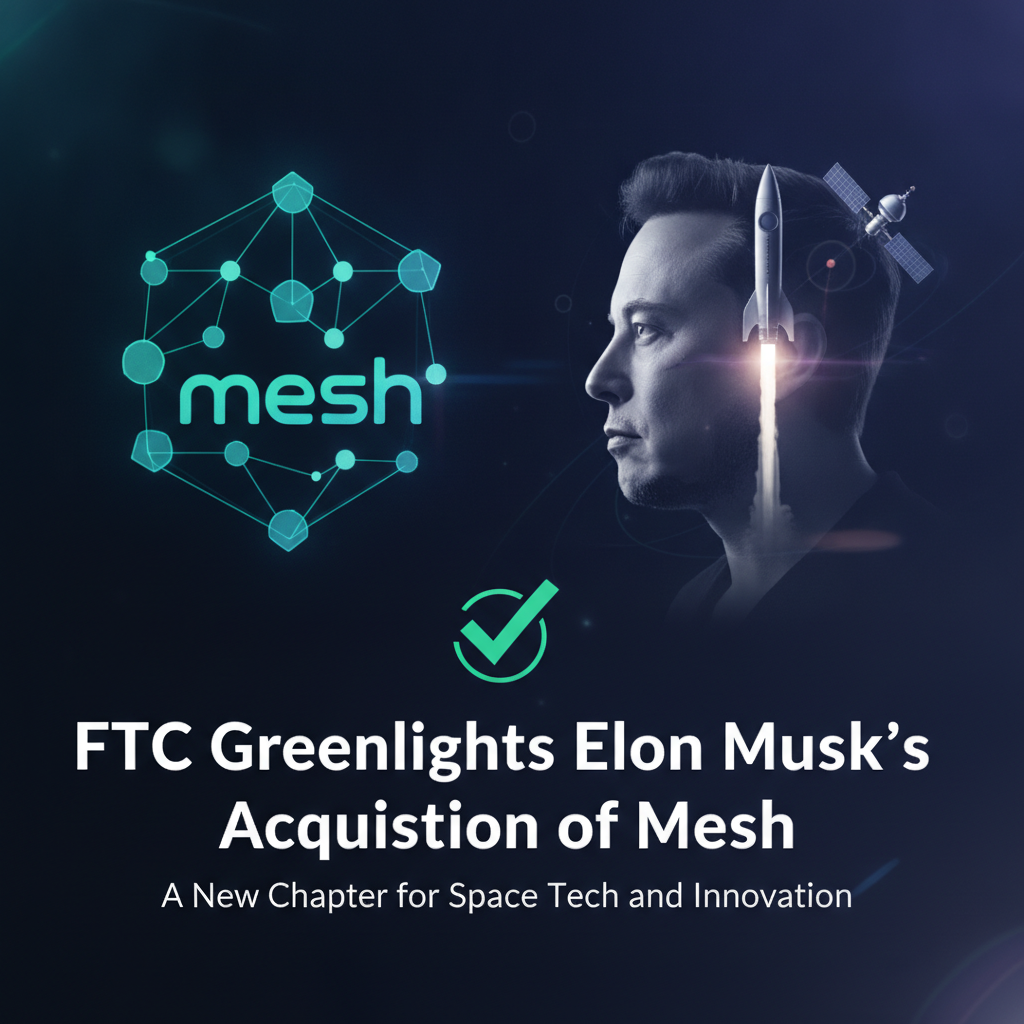
In a move that sends ripples through the burgeoning space technology sector, the U.S. Federal Trade Commission (FTC) has officially given its approval for Elon Musk to acquire Mesh, a promising startup founded by former SpaceX alumni. This regulatory greenlight, announced on June 26, 2026, marks a significant development, allowing Musk to further consolidate his vision for humanity’s multi-planetary future and integrate cutting-edge innovations into his sprawling ecosystem of ventures.
The acquisition of Mesh, a company that has quietly been making strides in advanced distributed satellite network technology, is expected to bring substantial synergies to SpaceX and potentially other Musk-led companies. Industry observers and enthusiasts are now keenly watching to see how this strategic integration will accelerate advancements in space communication, orbital infrastructure, and deep space exploration.
What is Mesh and Why is it Significant?
Mesh, though less publicly known than some of its peers, has garnered attention within the aerospace community for its innovative approach to satellite mesh networking. Founded by a cohort of highly experienced engineers and scientists who previously honed their skills at SpaceX, Mesh specializes in creating resilient, high-bandwidth, and secure inter-satellite communication protocols and hardware. Their technology aims to create a truly interconnected network in orbit, going beyond traditional point-to-point satellite links.
The significance of Mesh’s technology lies in its potential to:
- Enhance Starlink Capabilities: By providing a more robust and adaptive mesh layer, Mesh’s technology could drastically improve data routing, reduce latency, and increase the overall capacity and resilience of Starlink’s global internet constellation.
- Support Lunar and Martian Missions: For ambitious endeavors like building a sustainable presence on the Moon or Mars, advanced, self-healing communication networks are paramount. Mesh’s systems could form the backbone of these extraterrestrial communication infrastructures.
- Facilitate On-Orbit Servicing and Assembly: As the demand for satellite maintenance, refueling, and manufacturing in space grows, efficient communication between autonomous robotic systems and ground control becomes critical. Mesh offers a solution to this complex challenge.
The FTC’s Scrutiny and Approval
Any acquisition of this magnitude, particularly one involving a dominant figure like Elon Musk and a company operating in a strategically vital sector, naturally draws the attention of regulatory bodies. The FTC’s primary role in such cases is to review potential mergers and acquisitions for anti-competitive concerns, ensuring that a deal does not lead to a monopoly, stifle innovation, or harm consumers.
The approval from the FTC suggests that, after a thorough review, the commission found no significant anti-competitive issues that would warrant blocking the acquisition. This could indicate several things:
- Mesh’s market share was not deemed substantial enough to create a monopoly in its specific niche.
- The benefits of the acquisition (e.g., accelerated innovation, expansion of services) might outweigh potential concerns.
- Musk’s team or Mesh may have provided assurances or made concessions to address any initial regulatory queries.
The FTC’s greenlight clears a major hurdle, allowing the integration process to begin in earnest.
Elon Musk’s Strategic Vision and Future Implications
This acquisition aligns perfectly with Elon Musk’s overarching vision of making humanity a multi-planetary species and revolutionizing several key industries through advanced technology. Musk’s history of acquiring companies (or founding them with talent from his existing ventures) to fill strategic gaps or accelerate development is well-documented. From Tesla’s battery technology advancements to SpaceX’s reusable rockets, his approach has consistently been to push boundaries.
For SpaceX, the integration of Mesh’s expertise could mean a faster rollout of next-generation Starlink features, more robust support for Starship’s ambitious long-duration missions, and an acceleration in the development of critical space infrastructure. It reinforces Musk’s commitment to building a comprehensive and self-sufficient space economy.
What to Watch For Next:
- Integration of Mesh Technology: Expect announcements regarding how Mesh’s core technologies will be folded into existing SpaceX projects, particularly Starlink.
- Talent Retention and Expansion: The fate of Mesh’s talented team and potential new hires to scale their innovations will be a key indicator of future direction.
- Impact on Competitors: How will this acquisition influence other players in the space communication and orbital services market? Will it spur further consolidation or intensify competition?
A New Frontier for Space Innovation
The FTC’s approval of Elon Musk’s acquisition of Mesh is more than just a corporate transaction; it’s a testament to the dynamic and rapidly evolving landscape of the new space economy. By bringing Mesh’s specialized capabilities under the SpaceX umbrella, Musk is positioning his ventures to lead the next wave of innovation in space communication and infrastructure. This move promises to accelerate our journey towards a more interconnected Earth and an increasingly accessible cosmos.
As the integration unfolds, the world will be watching to see how this strategic acquisition shapes the future of space technology and brings us closer to humanity’s grandest extraterrestrial ambitions.
Leave a Reply