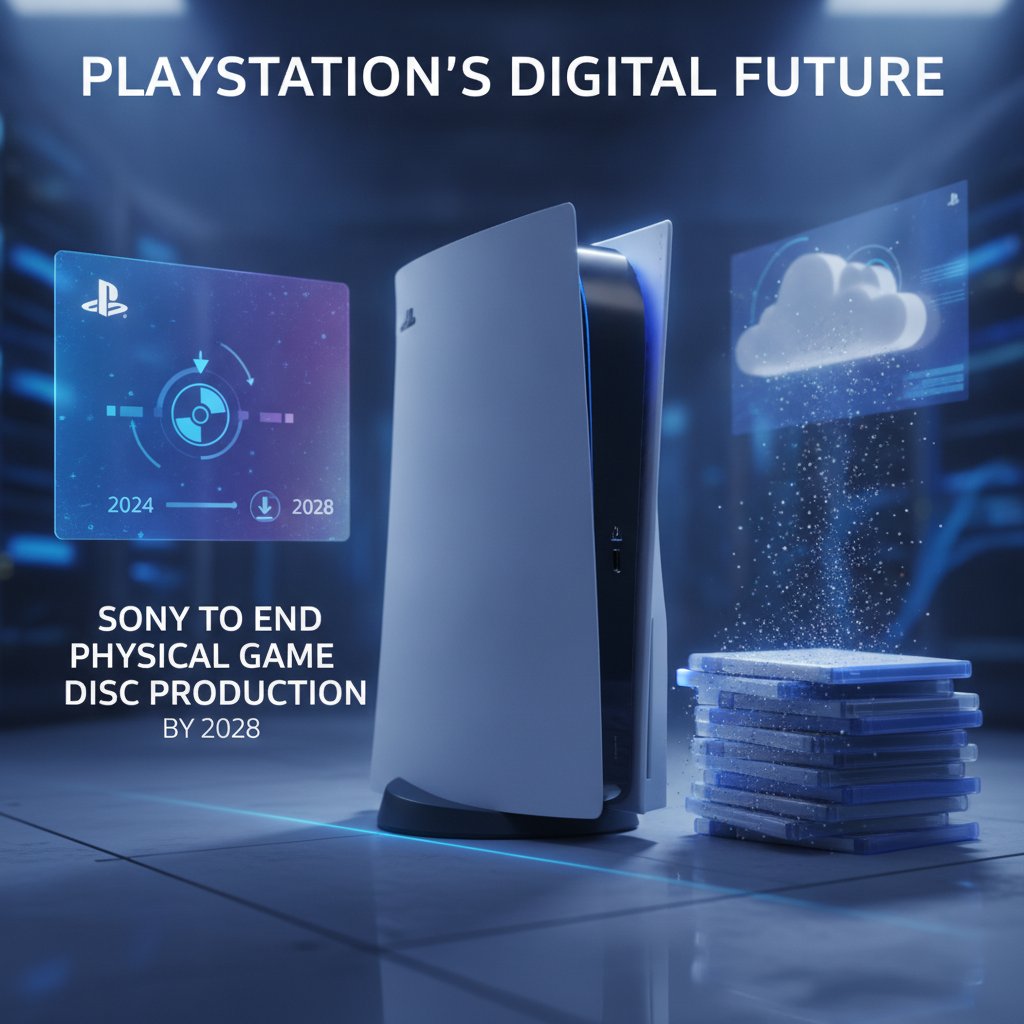
In a move that marks a significant turning point for the gaming industry, Sony Interactive Entertainment (SIE) has officially announced its plans to cease the production of physical PlayStation game discs by the year 2028. This pivotal decision underscores the accelerating shift towards a fully digital future for one of the world’s leading console platforms, signaling the end of an era for many gamers and collectors.
The Dawn of a Digital-Only PlayStation Era
While the exact date for the full transition is set for 2028, this announcement confirms long-standing industry speculation. The move aligns PlayStation with broader trends in entertainment consumption, where streaming and digital downloads have become the dominant forms of media distribution. For Sony, the benefits are clear: streamlined logistics, reduced manufacturing and distribution costs, and a tighter grip on its content ecosystem.
Why the Shift from Physical Discs to Digital?
Several factors have undoubtedly influenced Sony’s strategic pivot:
- Digital Dominance: Digital game sales have steadily eclipsed physical sales for years. Convenience, instant access, and frequent digital sales events have driven this consumer behavior.
- Cost Efficiency: Eliminating the need to manufacture, package, ship, and stock physical discs drastically cuts operational overheads for Sony and publishers.
- Environmental Impact: Reducing plastic waste from disc cases and packaging, as well as the carbon footprint from transportation, aligns with growing environmental sustainability goals.
- Evolving Hardware: The PlayStation 5 already offers a “Digital Edition” without a disc drive, indicating a clear path toward disc-less consoles. Future iterations are likely to follow suit.
- Subscription Models: The rise of services like PlayStation Plus Premium, offering extensive digital game libraries, further normalizes digital-only access.
What This Means for PlayStation Gamers
This seismic shift will have profound implications for the PlayStation community, impacting everything from game acquisition to ownership perception.
The Upsides: Convenience and Accessibility
- Instant Access: Download games directly to your console, eliminating trips to stores or waiting for deliveries.
- Less Clutter: A digital library means no physical disc cases taking up space.
- Global Reach: Digital distribution can make games more readily available in regions with limited physical retail infrastructure.
- Potential for Sales: Digital storefronts frequently offer competitive discounts and promotions.
The Downsides: Ownership, Preservation, and the Collector’s Dilemma
- Loss of Resale Value: Digital games cannot be resold, traded in, or lent to friends, fundamentally changing the traditional game ownership model.
- Digital Rights Management (DRM): Reliance on digital licenses means ownership is conditional, subject to account status and storefront longevity. What happens to your library if a service shuts down or your account is compromised?
- Internet Dependence: A stable and fast internet connection becomes even more crucial for downloading large game files.
- Impact on Collectors: For those who cherish physical media, cover art, and the tangibility of a collection, this announcement is a significant blow. The “thrill of the hunt” for rare physical editions will fade.
- “Brickable” Consoles: Without a disc drive, hardware failures could render entire digital libraries inaccessible if not properly backed up or tied to a robust cloud system.
The Wider Industry Impact
Sony’s decision reverberates beyond its own ecosystem:
- Retailers: Physical game retailers like GameStop will face an accelerated challenge to their traditional business model, pushing them further into accessories, merchandise, and used hardware.
- Competitors: Microsoft has already embraced a digital-first strategy with Xbox Game Pass and its disc-less consoles. Nintendo, while still heavily relying on physical cartridges, might feel pressure to re-evaluate its long-term strategy.
- Independent Game Stores: Smaller, specialized game stores that thrive on new and retro physical sales will need to innovate or face closure.
The Road Ahead: Preparing for a Digital Future
As 2028 approaches, PlayStation gamers should consider:
- Embracing Digital: Familiarize yourself with the PlayStation Store, digital game sales, and subscription services like PlayStation Plus.
- Hard Drive Management: Plan for sufficient internal and external storage, as game file sizes continue to grow.
- Collecting Now: If physical collecting is important to you, consider acquiring desired titles before production officially ceases.
- Digital Security: Ensure your PlayStation account is secure with strong passwords and two-factor authentication.
An End, and a New Beginning
Sony’s move to end physical PlayStation game disc production by 2028 is more than just a business decision; it’s a declaration of intent for the future of gaming. While it signals the sunset of a beloved era for many, it also paves the way for new innovations, greater accessibility (in some forms), and a more streamlined experience. The debate over digital vs. physical ownership will undoubtedly continue, but the direction for PlayStation is now unequivocally clear: the future is digital.
What are your thoughts on this monumental shift? Share your opinions in the comments below!
Leave a Reply