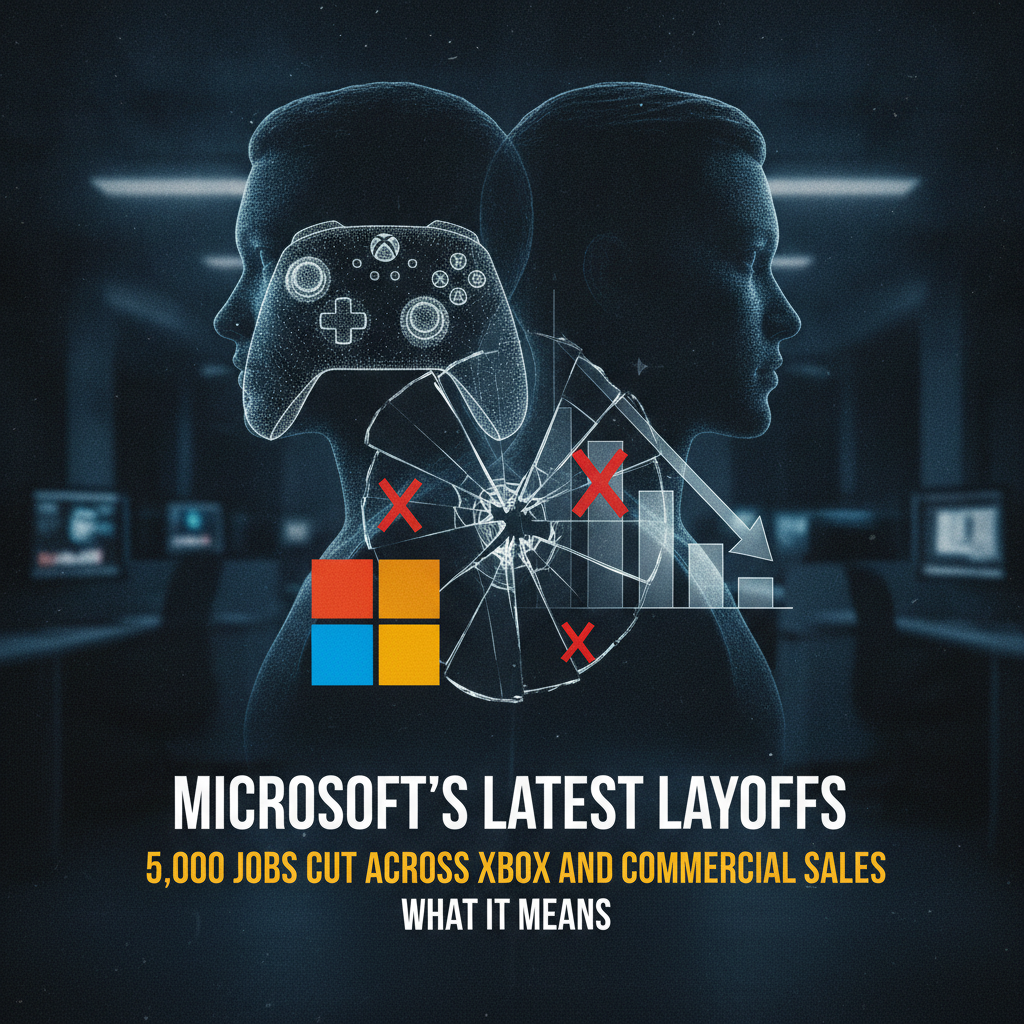
The tech industry continues to navigate a turbulent economic landscape, with even giants like Microsoft making difficult decisions to streamline operations. In a significant announcement on July 6, 2026, Microsoft confirmed a wave of layoffs impacting nearly 5,000 employees. The cuts are notably concentrated in two key divisions: Xbox and commercial sales, sending ripples of concern and speculation across the industry.
This move comes as companies worldwide reassess their growth trajectories and operational efficiencies amidst evolving market conditions. While Microsoft remains a powerhouse, these layoffs signal a strategic recalibration that could redefine its approach to gaming, enterprise solutions, and overall workforce management.
The Scale of the Reductions: 5,000 Employees Affected
A reduction of nearly 5,000 roles is a substantial move for a company of Microsoft’s stature. While the tech sector has seen numerous layoff announcements in recent years, this particular wave underscores a targeted effort to optimize specific areas of the business. The human impact of such decisions is always profound, affecting thousands of individuals and their families, as well as the teams and projects they leave behind.
Deep Dive: Xbox Division Cuts
The gaming world is abuzz with questions following the news that a significant portion of the layoffs occurred within the Xbox division. Xbox has been a cornerstone of Microsoft’s entertainment strategy, recently bolstered by major acquisitions and a strong focus on its Game Pass subscription service. The reasons for these cuts could be multifaceted:
- Post-Pandemic Correction: The gaming boom experienced during the global lockdowns has normalized. Companies that expanded rapidly to meet this demand are now adjusting to more modest growth projections.
- Strategic Restructuring: Microsoft may be re-evaluating its game development pipelines, publishing strategies, or even the operational structure following the integration of recent acquisitions.
- Efficiency Drives: A push for greater efficiency in how games are developed, marketed, and distributed could lead to consolidating roles or automating certain processes.
- Focus Shift: Resources might be reallocated towards high-priority projects or emerging technologies like cloud gaming infrastructure or AI integration within gaming.
The impact on upcoming Xbox titles, studio morale, and the competitive landscape will be closely watched by gamers and industry analysts alike.
Commercial Sales: A Reimagined Approach?
Beyond gaming, the commercial sales division also saw significant reductions. This area is crucial for Microsoft, driving revenue from its enterprise software, cloud services (Azure), and hardware solutions for businesses. Several factors could be at play here:
- Economic Headwinds: A slowdown in global economic growth often leads to businesses tightening their budgets, directly impacting enterprise software and service sales.
- Shift in Sales Strategy: Microsoft might be evolving its sales approach, potentially moving towards more digital-first strategies, partner-led models, or focusing on specific high-growth sectors.
- Automation and AI: The increasing integration of AI into sales processes, from lead generation to customer relationship management, could reduce the need for certain traditional sales roles.
- Optimizing Cloud Growth: While Azure continues to grow, Microsoft may be refining its sales force to ensure maximum efficiency in capturing market share and retaining cloud customers.
These cuts could signal a leaner, more technologically integrated sales force designed to meet the demands of a changing B2B landscape.
Broader Implications for Microsoft and the Tech Industry
Microsoft’s layoffs are not an isolated incident but rather fit into a larger pattern observed across the technology sector. Companies from various segments, including social media, e-commerce, and enterprise software, have undertaken similar measures. This trend suggests:
- A Shift from Hyper-Growth to Profitability: Investors are increasingly demanding sustainable profitability over aggressive, often unprofitable, expansion.
- Economic Uncertainty: Companies are bracing for potential economic slowdowns by optimizing their cost structures.
- AI-Driven Transformation: The rapid advancements in Artificial Intelligence are enabling companies to achieve more with fewer human resources in certain areas, prompting strategic workforce adjustments.
For Microsoft specifically, these layoffs could lead to a more agile and focused organization. The reallocation of resources, potentially towards high-priority areas like AI research and development, could solidify its position as a leader in future tech innovations.
Looking Ahead: Support and Strategy
For those affected by the layoffs, Microsoft is expected to provide comprehensive support, including severance packages, career transition services, and extended benefits. The tech community, while feeling the pinch, remains resilient, with many skilled professionals quickly finding new opportunities.
As Microsoft moves forward, these strategic workforce adjustments will undoubtedly shape its product roadmaps, market strategies, and overall corporate culture. The challenge for the company will be to maintain innovation and employee morale while navigating this period of significant change.
The tech industry is constantly evolving, and these layoffs serve as a stark reminder of the dynamic nature of the market. How Microsoft leverages these changes to emerge stronger will be a key story to watch in the coming months and years.
Leave a Reply