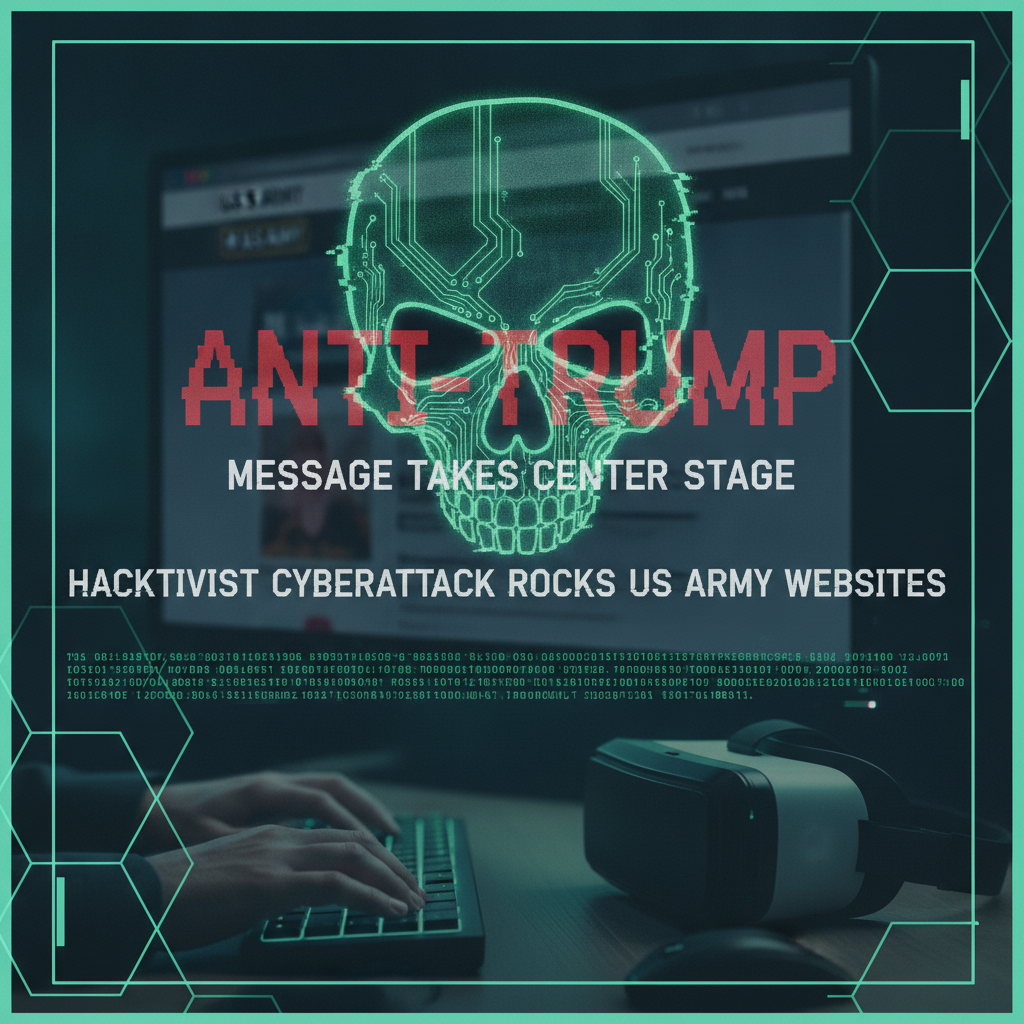
In a bold and highly publicized digital protest, a group of unidentified hacktivists has reportedly compromised and defaced several United States Army websites. The cyberattack, which occurred earlier today on July 7, 2026, prominently featured anti-Trump messages, drawing immediate attention to both the vulnerabilities of government digital infrastructure and the escalating landscape of political hacktivism.
The incident marks a significant escalation in the use of cyber tactics for political messaging, transforming military web portals into public canvases for dissent. As the world watches, this event underscores the growing intersection of technology, politics, and national security.
The Breach: What Happened?
Early reports indicate that multiple US Army websites, primarily recruitment and information-oriented portals, were targeted. Visitors attempting to access these sites were greeted not with official military content, but with stark, politically charged messages directly critical of former President Donald Trump. While the exact number of compromised sites is still being assessed, initial reports suggest a coordinated effort rather than isolated incidents.
The defaced pages displayed various slogans, including phrases like "TRUTH OVER TYRANNY" and "WE THE PEOPLE WON’T BE SILENCED," alongside imagery suggesting a critique of Trump’s political actions and policies. The hacktivists ensured their message was clear, directly linking their actions to political opposition.
While the defacement was overt, there is no immediate indication that sensitive data was exfiltrated or that the core operational networks of the U.S. Army were compromised. The attack appears to be a classic act of defacement, aiming for maximum visibility and political impact rather than espionage or sabotage.
Who Are the Hacktivists and What’s Their Motive?
As of now, no specific group has officially claimed responsibility for the attack. However, the nature of the messages and the target strongly point towards hacktivist collectives driven by political motivations. Hacktivism, a portmanteau of "hacking" and "activism," refers to the use of computer hacking techniques to promote a political or social cause.
The motivation behind this particular cyberattack is unequivocally political: to "call out" Donald Trump and voice opposition through a high-profile, attention-grabbing spectacle. This incident leverages the symbolic power of defacing a military domain to amplify a political message, aiming to embarrass and provoke dialogue.
A History of Digital Dissent
Hacktivism has a long history, with groups like Anonymous gaining notoriety for similar actions against governments, corporations, and religious organizations. These groups often operate pseudonymously, using their collective digital skills to challenge authority and shed light on issues they deem unjust. This latest incident fits squarely within this tradition, albeit with a new focus on American political figures and institutions.
Official Response and Cybersecurity Implications
The United States Army swiftly acknowledged the incident, issuing a statement confirming the defacements and announcing that affected websites had been taken offline for assessment and restoration. "We are working diligently to restore full functionality and investigate the root cause of this intrusion," a spokesperson stated, emphasizing that "the security of our digital assets is paramount."
The Department of Defense and federal cybersecurity agencies are expected to launch a full investigation to identify the perpetrators and shore up defenses. This incident raises critical questions about the cybersecurity posture of government entities, even those ostensibly protected by robust defense mechanisms. If recruitment websites can be defaced, it suggests potential vulnerabilities that could be exploited for more nefarious purposes.
Broader Cybersecurity Concerns:
- Vulnerability Exposure: Even seemingly non-critical websites can serve as entry points or demonstrate systemic weaknesses.
- Political Weaponization: Cyberattacks are increasingly becoming a tool for political expression, protest, and influence.
- Trust and Confidence: Such breaches can erode public trust in government institutions’ ability to protect their digital presence and, by extension, sensitive information.
- Deterrence Challenges: Attributing and prosecuting hacktivist groups, especially those operating across borders, remains a significant challenge for law enforcement.
The Road Ahead: Protecting Digital Frontiers
This hacktivist attack serves as a stark reminder that no organization, especially government entities, is immune to cyber threats. The digital battleground is constantly evolving, with adversaries ranging from state-sponsored groups to ideologically motivated hacktivists.
For the US Army and other government agencies, the focus will now shift to not only restoring the compromised sites but also conducting a thorough forensic analysis, patching vulnerabilities, and enhancing their overall cybersecurity framework. This includes:
- Implementing more rigorous intrusion detection systems.
- Regular security audits and penetration testing.
- Employee training on phishing and social engineering tactics.
- Robust content management system (CMS) security.
- Developing rapid response plans for similar incidents.
As the political climate remains charged, the digital realm will likely continue to be a significant arena for activism and protest. The incident involving the US Army websites is a clear signal that the lines between cyber warfare, political dissent, and national security are becoming increasingly blurred, demanding constant vigilance and adaptation from all sectors.
Leave a Reply