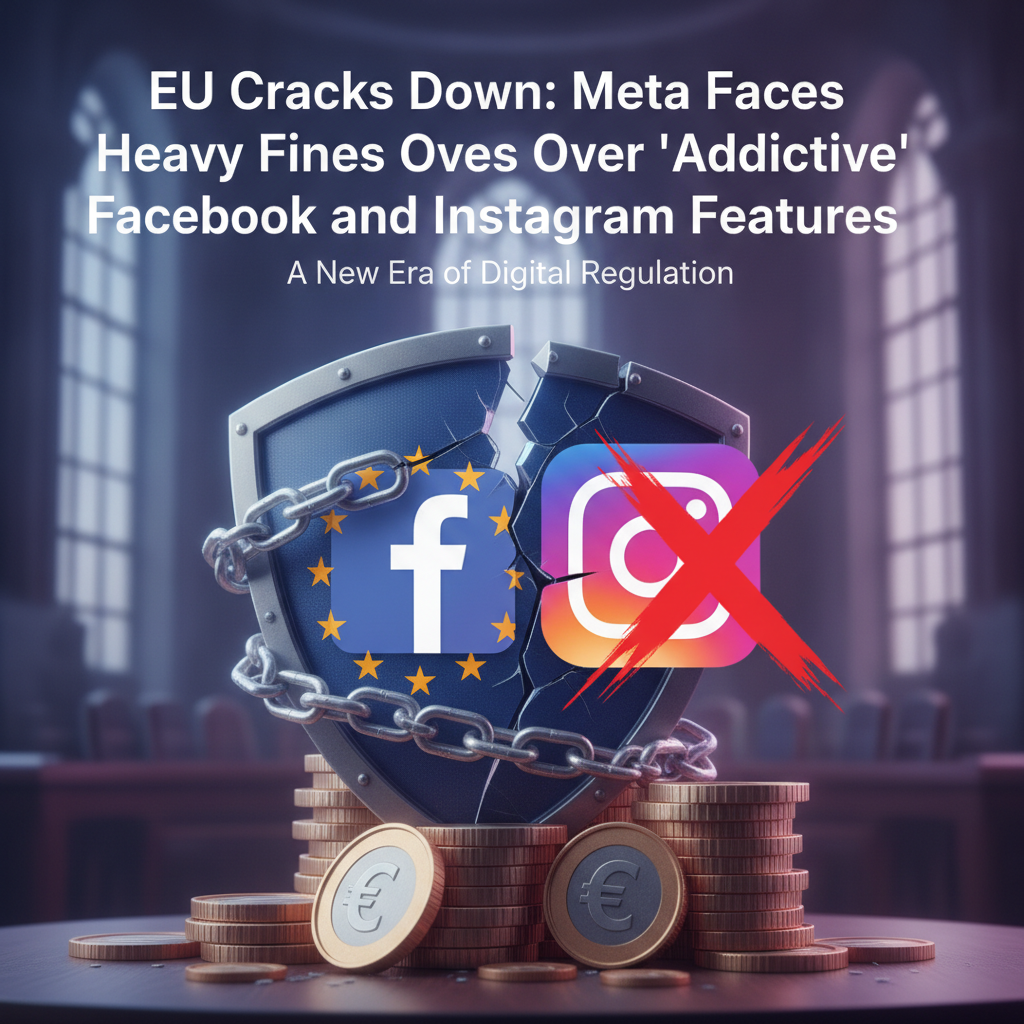
The digital world is abuzz with a significant development: the European Union has issued a stern warning to Meta, the tech giant behind social media behemoths Facebook and Instagram. The threat is clear – substantial fines loom over the company due to concerns regarding the allegedly ‘addictive features’ embedded within its platforms. This move marks a pivotal moment in the ongoing global effort to regulate big tech and prioritize user well-being over engagement metrics.
The EU’s Ultimatum: Unpacking the Concerns
At the heart of the EU’s threat lies a deep concern for user mental health and digital well-being, particularly among younger audiences. Regulators allege that Facebook and Instagram are deliberately designed with features that maximize user engagement, often to the point of fostering addictive behaviors. These features can include endless scrolling feeds, highly personalized algorithmic recommendations, persistent notifications, and gamified interactions – all engineered to keep users hooked for longer periods.
The EU’s stance suggests a belief that Meta has not adequately addressed the systemic risks posed by these design choices, leading to potential harm such as increased anxiety, depression, body image issues, and excessive screen time. This isn’t merely about user choice; it’s about the responsibility of platforms that wield immense influence over billions of lives.
The Digital Services Act (DSA): Europe’s Regulatory Hammer
This aggressive stance from the EU is not arbitrary. It is firmly rooted in the groundbreaking Digital Services Act (DSA), one of Europe’s most ambitious pieces of legislation designed to make the digital space safer and more accountable. Under the DSA, Very Large Online Platforms (VLOPs) like Meta’s Facebook and Instagram are held to a higher standard of responsibility.
Key provisions of the DSA empower the European Commission to investigate and sanction platforms for failing to mitigate systemic risks, including those related to addictive design. The Act mandates that VLOPs conduct thorough risk assessments and implement measures to protect fundamental rights, user safety, and digital well-being. The current threat against Meta signals that the EU is ready and willing to use its new regulatory powers to enforce these mandates.
The Staggering Cost: Fines and Feature Overhauls
The financial implications for Meta could be colossal. Under the DSA, companies found in breach can face fines of up to 6% of their global annual turnover. For a company of Meta’s size, this could translate into billions of dollars, a penalty designed to be significant enough to compel compliance and deter future infractions.
However, the impact extends beyond monetary penalties. A ruling against Meta could force the company to fundamentally redesign core features of Facebook and Instagram. This might involve:
- Implementing stricter controls over algorithmic recommendations.
- Introducing mandatory breaks or ‘nudges’ to reduce screen time.
- Limiting or redesigning notification systems to be less intrusive.
- Offering users more granular control over their feeds and content exposure.
- Investing heavily in independent audits and transparency measures related to platform design.
Such changes would not only be costly but could also reshape Meta’s business model, which heavily relies on maximizing user engagement to deliver targeted advertising.
Broader Implications for Big Tech and User Experience
The EU’s action against Meta sends a clear message across the entire tech industry: the era of unchecked platform design is drawing to a close. Other social media giants, streaming services, and online platforms will undoubtedly be watching this case closely, assessing their own compliance with evolving global regulations.
For users, this could herald a new era of digital experiences designed with well-being in mind. While some might lament potential changes that reduce engagement, many advocacy groups, parents, and individuals concerned about their digital habits will welcome a shift towards healthier online environments. It represents a move towards platforms taking greater responsibility for the societal impact of their products.
What’s Next for Meta and the EU?
Meta now faces a critical juncture. The company will likely engage in intensive dialogue with EU regulators, potentially proposing new measures or modifications to its platforms to demonstrate compliance. However, the EU has shown little patience for self-regulation when it believes systemic issues persist.
This developing story underscores the increasing tension between technological innovation and regulatory oversight. As the digital landscape continues to evolve, the push for greater accountability and user protection will remain a central theme, with the EU leading the charge in shaping the future of responsible platform design.
The outcome of this confrontation will not only define Meta’s future in Europe but also set a significant precedent for how tech companies worldwide operate and interact with their users.
Leave a Reply