
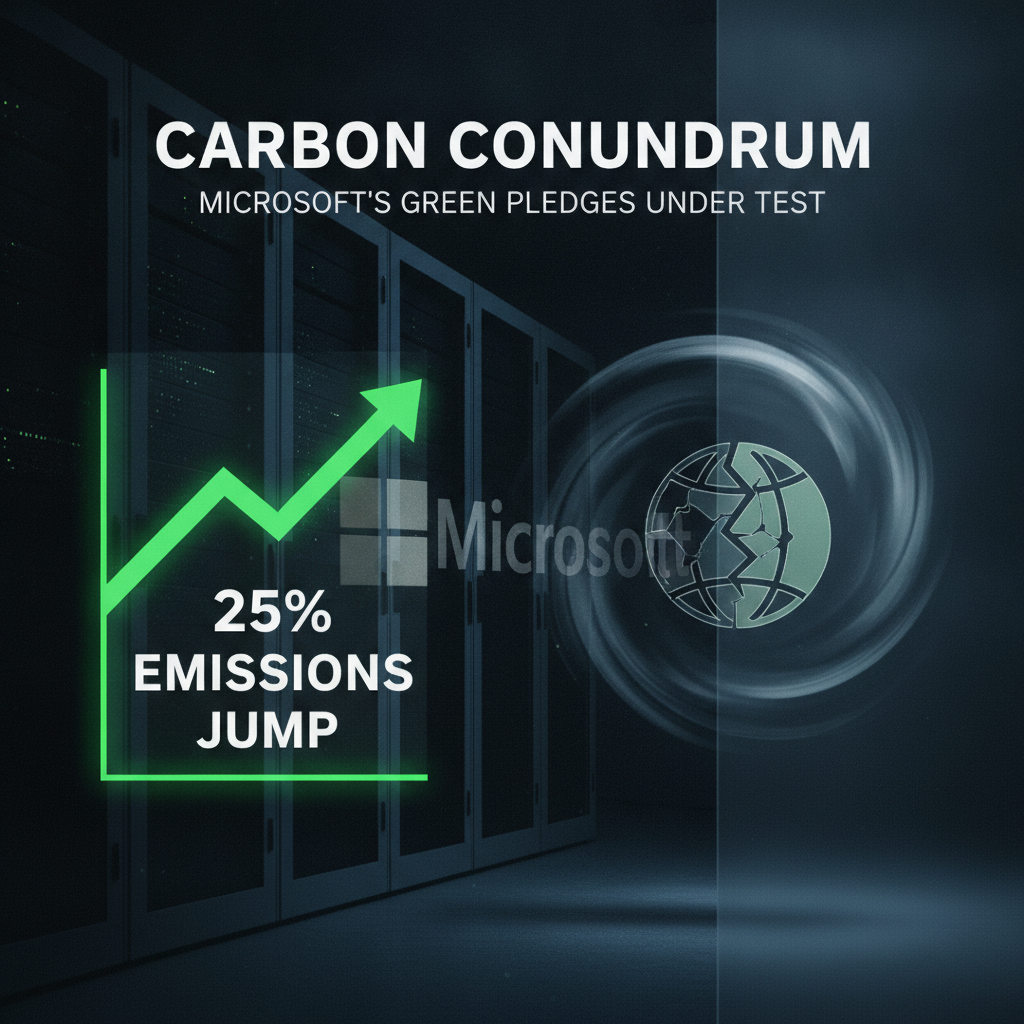
Microsoft, a global tech behemoth and a prominent advocate for environmental responsibility, recently reported a startling 25 percent increase in its carbon emissions. This significant jump, detailed by publications like Wired, casts a critical light on the complex challenges even the most committed corporations face in their quest for sustainability, especially as demand for cloud services and AI skyrockets.
The Alarming Numbers: A Quarter-Percent Rise
The revelation that Microsoft’s emissions surged by a quarter comes as a shock, particularly given the company’s ambitious commitment to becoming carbon negative by 2030. This goal, announced with much fanfare, entails removing more carbon from the atmosphere than it emits. The latest figures suggest a formidable uphill battle ahead, highlighting the immense energy demands of modern technological infrastructure.
Deconstructing the Emissions Spike: Why the Jump?
Several intertwined factors are contributing to Microsoft’s ballooning carbon footprint:
-
Explosive Cloud Computing Growth
Microsoft Azure, the company’s cloud computing platform, continues to expand at an unprecedented rate. Data centers, the physical backbone of cloud services, are massive energy consumers. They require constant power for servers, cooling systems, and network infrastructure, often drawing from grids that still rely heavily on fossil fuels.
-
The AI Revolution’s Thirsty Appetite
The artificial intelligence (AI) boom is undeniably energy-intensive. Training complex AI models, like those powering generative AI tools, demands colossal computational power, translating directly into higher electricity consumption for the underlying hardware and data centers.
-
Scope 3 Emissions: The Hidden Challenge
A significant portion of Microsoft’s reported increase likely falls under Scope 3 emissions. These are indirect emissions from activities not owned or controlled by the organization but occur in its value chain. For a company like Microsoft, this includes emissions from its supply chain (manufacturing components), customer use of its products (e.g., Xbox consoles, employee travel, and the lifecycle of its hardware). Controlling these diverse and decentralized sources presents a monumental challenge.
-
Indirect Energy Sourcing
While Microsoft invests heavily in renewable energy projects, the sheer scale of its operations means it still indirectly relies on grids powered by a mix of energy sources, not all of which are clean. The transition to 100% renewable energy for all its operations is an ongoing and complex endeavor.
Microsoft’s Green Ambitions vs. Reality
Microsoft has been a vocal leader in corporate sustainability, setting aggressive goals not just for carbon negativity but also for water positivity and zero waste. They’ve invested billions in sustainable technologies, carbon removal projects, and renewable energy procurement. Yet, these latest figures underscore a crucial tension: the relentless growth of the tech industry, particularly in cloud and AI, is creating an accelerating demand for energy that outpaces even the most diligent sustainability efforts.
This situation forces a re-evaluation of how tech giants can achieve their climate goals amidst such rapid expansion. It’s a stark reminder that even with significant investment and commitment, decoupling growth from environmental impact remains incredibly difficult.
Broader Implications for Tech and the Planet
Microsoft’s predicament is not unique; it’s a bellwether for the entire technology sector. As other companies race to build out their cloud infrastructure and develop cutting-edge AI, they too will grapple with escalating energy demands and the associated carbon footprint. This trend raises critical questions:
- Can the tech industry genuinely lead the charge against climate change while simultaneously driving unprecedented consumption of resources?
- What responsibility do tech innovators have to design more energy-efficient algorithms and hardware?
- How can consumers and businesses demand greater transparency and accountability from the tech companies they rely on?
The Path Forward: Innovation, Accountability, and Urgency
Addressing this challenge requires a multi-faceted approach:
- Accelerated Renewable Energy Adoption: A rapid shift to 100% clean, renewable energy for all data centers and operations globally.
- Energy Efficiency Innovations: Developing more efficient hardware, advanced cooling technologies, and optimized software to reduce energy consumption per unit of computation.
- Sustainable AI Development: Researching and implementing ‘green AI’ practices that prioritize energy efficiency in model training and deployment.
- Enhanced Supply Chain Oversight: Working closely with suppliers to reduce emissions across the entire value chain (Scope 3).
- Robust Carbon Removal: Scaling effective and verifiable carbon removal technologies to genuinely achieve carbon negativity.
Conclusion: A Call for Greater Scrutiny and Action
Microsoft’s 25 percent jump in emissions is a sobering reminder that even with ambitious pledges, the environmental impact of the digital age is profound and growing. It highlights the critical need for continued innovation, unwavering commitment, and heightened accountability from all tech leaders. The world is watching to see if Silicon Valley’s promises of a sustainable future can withstand the immense energy demands of its own technological advancements.
Leave a Reply