
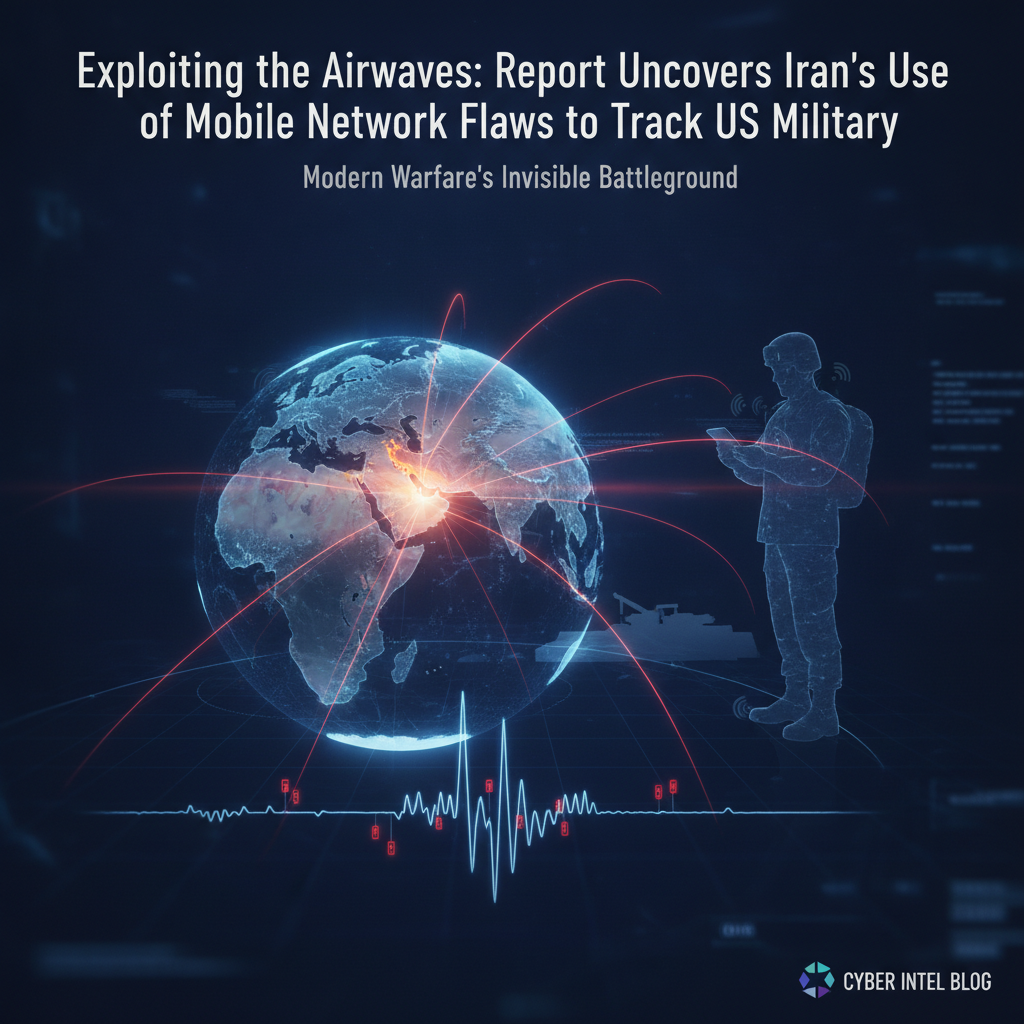
A new, critical report has sent shockwaves through the cybersecurity and national security communities, alleging that Iran has systematically exploited inherent vulnerabilities within global mobile networks to pinpoint and track US military personnel operating across the Middle East. The revelations, which come to light today, underscore the escalating sophistication of state-sponsored cyber espionage and the pervasive threats lurking within the very infrastructure our interconnected world relies upon.
The Alarming Discovery: A Threat to Operational Security
According to the detailed report, Iranian operatives have leveraged known weaknesses in the signaling protocols of international mobile networks – potentially including the notorious Signaling System No. 7 (SS7) – to gather location data on American service members. This isn’t merely about knowing a general area; the capabilities demonstrated by Iran, as outlined in the findings, suggest a dangerous precision that could compromise troop movements, operational planning, and ultimately, the safety of personnel.
The report points to a calculated campaign of intelligence gathering, transforming civilian communication infrastructure into a covert surveillance tool. This exploitation highlights a critical blind spot for military and intelligence agencies worldwide: the reliance on commercial networks that, while convenient, were not designed with high-level state-sponsored threat resilience in mind.
Understanding the Vulnerabilities: The Silent Threat of SS7 and Beyond
While the report does not exclusively name SS7, its description of the attack vectors strongly implicates this decades-old protocol. SS7 underpins nearly all global mobile phone calls and texts, enabling essential functions like call routing, SMS delivery, and roaming. However, its original design lacked robust security mechanisms, making it susceptible to a range of attacks, including:
- Location Tracking: Attackers can query network databases for a subscriber’s real-time location.
- Call Interception: Diverting or listening in on calls.
- SMS Interception: Reading text messages, potentially bypassing two-factor authentication.
- Denial of Service: Disrupting mobile services for specific individuals or areas.
Beyond SS7, other sophisticated techniques involving compromised cellular base stations (IMSI catchers) or advanced malware distributed through network access could also be part of such a comprehensive strategy. The report emphasizes that Iran’s success stems from a deep understanding of these foundational network architectures and a persistent effort to weaponize their flaws.
Profound Implications for National Security and Military Personnel
The implications of Iran’s alleged actions are severe and far-reaching:
- Troop Safety: Precise location data puts military personnel at direct risk from targeted attacks, ambushes, or kidnappings.
- Operational Security (OPSEC): Knowledge of troop movements, concentrations, and deployment patterns can severely undermine strategic advantages and reveal sensitive information.
- Intelligence Gathering: Beyond location, the potential for call and SMS interception could provide adversaries with invaluable intelligence on plans, communications, and personnel details.
- Erosion of Trust: This incident further erodes trust in global telecommunications infrastructure and raises questions about the ability of nations to protect their most sensitive assets from digital espionage.
The Broader Geopolitical Cybersecurity Landscape
This incident is a stark reminder of the ongoing cyber arms race between nation-states. It demonstrates a clear evolution in state-sponsored threat tactics, moving beyond traditional cyberattacks on IT systems to exploiting the core infrastructure of public networks. For countries with active military presences abroad, securing personnel against such sophisticated, often invisible, surveillance has become a paramount challenge.
The report calls for urgent action from mobile network operators, governments, and defense organizations. While securing SS7 and other legacy protocols is a monumental task, often requiring expensive upgrades or a transition to newer, more secure architectures (like 5G SA with enhanced security features), the cost of inaction is clearly much higher.
Protecting Against the Invisible Threat
For military personnel and indeed anyone operating in high-risk environments, this report highlights the critical need for enhanced vigilance and secure communication practices:
- Secure Communication Channels: Prioritizing encrypted, government-issued communication devices and applications over personal cell phones.
- “Off-Grid” Protocols: Implementing strict protocols for when and where personal mobile devices can be used, or recommending leaving them behind entirely in certain operational zones.
- Network Hardening: Mobile network operators must accelerate efforts to identify and patch vulnerabilities in their signaling networks and transition to more secure technologies.
- Intelligence Sharing: Enhanced cooperation between intelligence agencies and network providers is crucial to detect and mitigate such threats proactively.
Conclusion: A Call for Urgent Action and Resilience
The report detailing Iran’s alleged exploitation of mobile network vulnerabilities to track US military personnel is a sobering wake-up call. It underscores that the battlefield of the 21st century extends far beyond physical borders, permeating the very airwaves and digital infrastructure we all share. As nation-states continue to push the boundaries of cyber warfare and espionage, the onus is on governments, network operators, and individuals alike to recognize these evolving threats and build resilient defenses against an increasingly invisible enemy.
Staying informed and advocating for stronger cybersecurity measures in our global infrastructure is no longer just a technical concern; it is a matter of national security and human safety.
Leave a Reply