
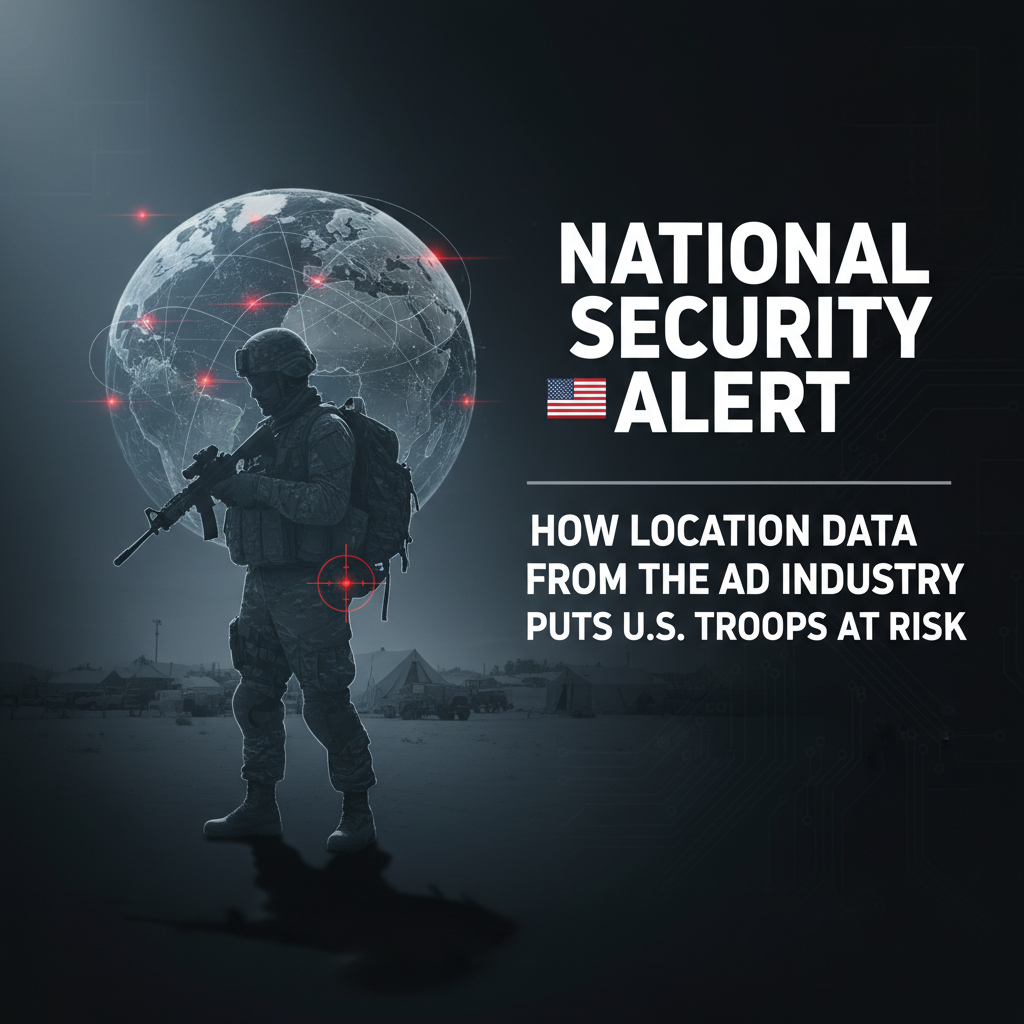
The digital age, for all its conveniences, has unleashed unprecedented challenges to privacy and security. A recent, alarming revelation by the U.S. government brings this threat into stark focus: U.S. troops have reportedly been targeted using readily available location data, leading one senator to brand the entire ad industry as a direct ‘national security threat.’ This isn’t just about privacy violations; it’s about weaponized data, putting our service members and national interests in grave danger.
The Invisible Threat: How Location Data Targets Our Troops
In today’s hyper-connected world, virtually every smartphone app, website, and digital service collects information about us. Among the most sensitive of these data points is location data. This information, often collected through seemingly innocuous apps on personal devices, is aggregated, bought, and sold by a vast, largely unregulated network of data brokers and advertisers.
The problem arises when this commercially available data falls into the wrong hands. For U.S. troops, sophisticated adversaries can leverage this data to:
- Track movements: Pinpointing the exact whereabouts of individual service members or groups, both on and off duty.
- Reveal patterns: Identifying regular routes, home addresses, frequent meeting spots, or even deployment patterns.
- Exploit vulnerabilities: Understanding personal habits, social connections, and potential weaknesses that could be used for intelligence gathering, blackmail, or direct targeting.
- Identify sensitive locations: Unwittingly revealing the presence of military personnel near classified facilities or operational areas.
This isn’t theoretical; the U.S. government’s warning indicates specific instances of such targeting, transforming everyday digital footprints into pathways for surveillance and potential harm.
A Senator’s Grave Warning: The Ad Industry as a National Security Foe
The severity of this issue has prompted a strong condemnation from a U.S. senator, who didn’t mince words in labeling the advertising technology (ad tech) industry as a ‘national security threat.’ This bold declaration underscores a critical shift in how policymakers view the largely unchecked collection and trade of personal data.
The core of the senator’s argument is that the ad industry’s business model – built on hoovering up as much data as possible, with often opaque consent mechanisms and virtually no accountability for how that data is secured or sold downstream – creates an open door for foreign adversaries. When data brokers can acquire granular location data of U.S. military personnel and potentially sell it to anyone willing to pay, the commercial interests of the ad industry directly conflict with the protective imperative of national security.
The lack of a comprehensive federal data privacy law in the U.S. exacerbates this problem, creating a regulatory vacuum that bad actors readily exploit. While companies profit from this data free-for-all, the cost is increasingly being borne by the privacy and safety of our service members.
Beyond the Battlefield: The Broader Data Privacy Crisis
While the immediate focus is on our troops, this crisis highlights a much broader societal issue: the unchecked power of data brokers and the profound vulnerability of personal data in the digital age. If the location data of military personnel can be so easily compromised, what does that mean for the average citizen?
- Our daily routines, medical appointments, political affiliations, and even intimate personal details are being collected and traded.
- This data can be used not only for targeted advertising but also for fraud, identity theft, discrimination, and even coercive surveillance.
- The opaque nature of the data economy means most individuals have no idea what data has been collected about them, who possesses it, or how it’s being used.
The warning about military personnel serves as an urgent siren for everyone: digital advertising and the vast data ecosystem supporting it have evolved beyond harmless marketing into a sophisticated infrastructure that can be weaponized.
Protecting Our Protectors: Calls for Action and Regulation
Addressing this grave threat requires a multi-faceted approach involving government, industry, and individuals:
-
Federal Data Privacy Legislation:
The most crucial step is the enactment of a comprehensive federal privacy law in the U.S. that restricts the collection, use, and sale of sensitive data, particularly location data. This legislation must include robust enforcement mechanisms and hold data brokers accountable.
-
Enhanced Military Protocols:
The Department of Defense must continue to strengthen digital hygiene training for service members, emphasizing the risks of location-sharing apps, public Wi-Fi, and social media oversharing on personal devices. Implementing technologies to block or obfuscate such data for personnel in sensitive roles is also critical.
-
Industry Accountability:
The ad tech industry must move beyond self-regulation. There’s a clear need for greater transparency regarding data collection practices, stricter controls on data sharing, and severe penalties for companies that fail to protect user data from hostile exploitation.
-
Individual Awareness and Action:
Users must be more vigilant. Reviewing app permissions, disabling location services for non-essential apps, using VPNs, and understanding the privacy settings on devices and social media platforms can provide some level of personal protection.
The Time for Action is Now
The U.S. government’s revelation that troops were targeted with location data, and the subsequent warning about the ad industry as a national security threat, is a stark wake-up call. The lines between commercial data collection and geopolitical espionage have blurred, making our digital footprints a potential weapon.
Protecting those who protect us, and indeed, safeguarding the privacy of all citizens, demands immediate, decisive action. It’s time to tame the wild west of data harvesting and establish a digital environment where security and privacy are paramount, not expendable commodities.
Leave a Reply