
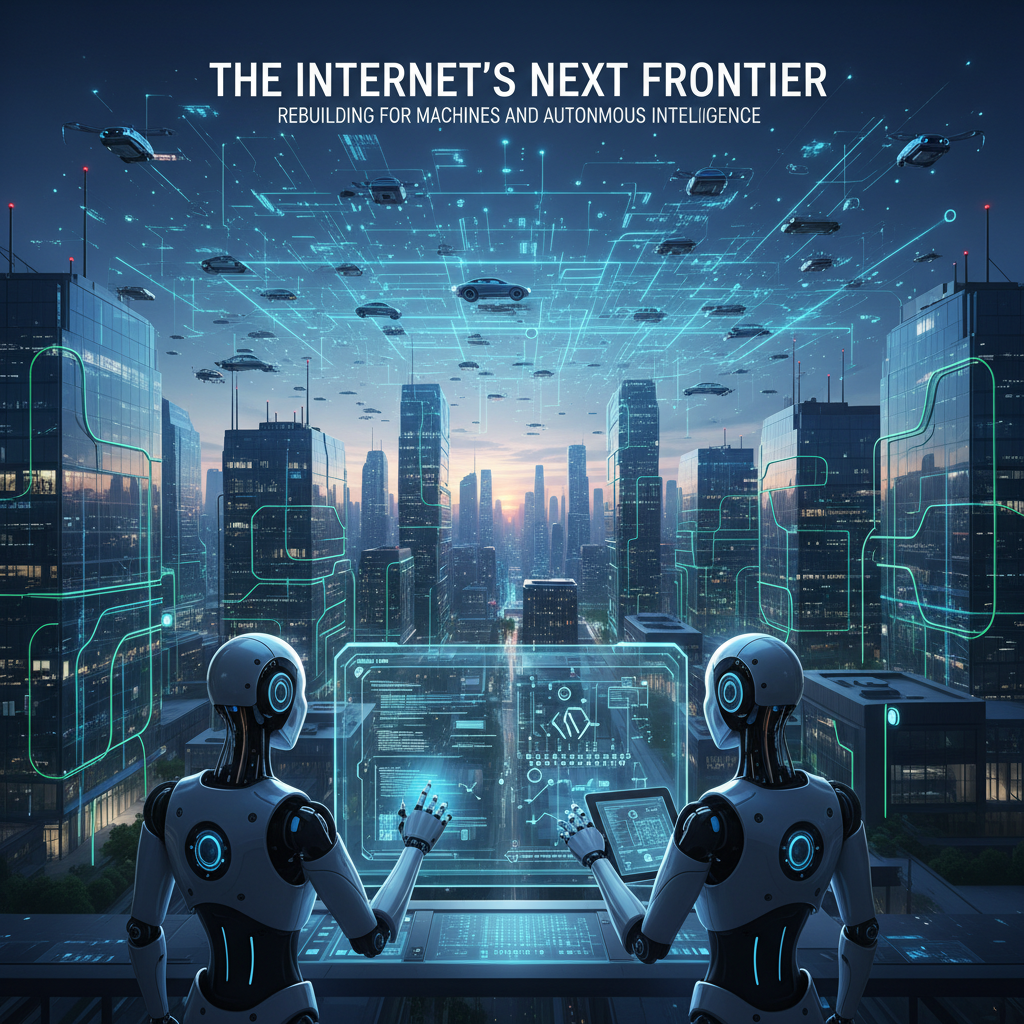
For decades, the internet has primarily served one master: humanity. It was built for our eyes, our clicks, our consumption of information presented in a visually digestible format. But a profound transformation is underway. The internet, as we know it, is being fundamentally rebuilt for machines – for AI, autonomous agents, and the countless devices that form the Internet of Things (IoT). This isn’t just an upgrade; it’s a paradigm shift that will redefine our digital future.
Why the Shift? The Limitations of a Human-Centric Web
The current internet, brilliant as it is, presents significant challenges for automated systems:
- Semantic Gaps: Machines struggle to understand the context and meaning behind human-readable web pages. They can parse text, but true comprehension, like discerning the intent behind a product review or a news article, is elusive without complex AI processing.
- Data Inefficiency: Extracting structured data from unstructured web content (like scraping a website) is resource-intensive and prone to breakage as site designs change.
- Protocol Limitations: HTTP, designed for document transfer, isn’t always the most efficient or secure protocol for high-volume, real-time machine-to-machine (M2M) communication.
- Scalability Demands: With billions of IoT devices and increasingly sophisticated AI agents, the sheer volume of data exchange requires a more robust, machine-friendly infrastructure.
The Pillars of the Machine-First Internet
This grand rebuild is underpinned by several key technological advancements:
1. The Semantic Web & Linked Data
The vision of the Semantic Web, where data is linked and given context to be understood by machines, is finally maturing. Technologies like RDF (Resource Description Framework) and ontologies allow data to be published in a machine-readable, interconnected format. Imagine an AI agent not just finding a product, but understanding its properties, origins, environmental impact, and user sentiment directly from structured data, without needing to ‘read’ a webpage.
2. Advanced AI Agents and Autonomous Systems
Artificial Intelligence is no longer just processing data; it’s becoming an active participant in the digital ecosystem. AI agents will increasingly interact with each other, negotiate services, execute transactions, and make decisions autonomously. This requires an internet where APIs are standardized, data is interoperable, and trust mechanisms (perhaps blockchain-based) are inherent.
3. The Ubiquity of IoT and Edge Computing
From smart cities to industrial sensors, the Internet of Things is generating a torrent of data at the edge of the network. These devices need to communicate directly and efficiently with other machines, cloud platforms, and AI systems without constant human intervention. Edge computing becomes critical, allowing immediate data processing and decision-making closer to the source, reducing latency and bandwidth strain on the core network.
4. New Protocols, Decentralization, and Web3 Principles
While HTTP remains foundational, new protocols are emerging to facilitate machine communication. Furthermore, the principles of Web3 – decentralization, verifiable data, and tokenized economies – offer a framework for machines to interact in a trustless, transparent, and autonomous manner. Smart contracts, for example, can enable automated agreements between AI agents without human intermediaries.
What This Means for Businesses, Developers, and Everyday Life
The implications of a machine-centric internet are far-reaching:
For Businesses: Unprecedented Automation & New Models
- Hyper-automation: Supply chains will be optimized by autonomous agents negotiating logistics; customer service will be handled by proactive AI; manufacturing processes will be entirely self-managing.
- Predictive Intelligence: Businesses will gain deeper, real-time insights from vast datasets, enabling truly predictive analytics across every facet of operations.
- Innovative Services: Entirely new business models will emerge, built around autonomous services and M2M interactions, creating new markets and efficiencies.
For Developers: A New Frontier of Creation
- Focus on Interoperability: Developers will need to build systems and APIs with machine understanding at their core, emphasizing structured data and semantic richness.
- AI-First Architectures: Designing applications where AI agents are first-class citizens, interacting directly with services and other agents, will become standard.
- Security & Ethics: Building secure, private, and ethically sound machine interactions will be paramount, requiring robust new frameworks and practices.
For Everyday Life: Seamless (and Often Invisible) Intelligence
- Proactive Assistance: Your smart home will not just respond to commands but anticipate needs. Your car will communicate with traffic infrastructure to optimize your route in real-time. Medical devices will proactively alert healthcare providers.
- Personalized Automation: AI agents could manage your finances, optimize your energy consumption, or curate information far more effectively than current systems, all operating in the background.
- Challenges: Concerns around privacy, data ownership, algorithmic bias, and the potential for autonomous systems to make decisions without human oversight will become increasingly critical to address.
Embracing the Autonomous Future
The internet’s rebuild for machines is not a distant sci-fi fantasy; it’s happening now, piece by piece, protocol by protocol. This transformation promises an era of unprecedented efficiency, automation, and intelligent services. However, it also demands careful consideration of the ethical, security, and societal implications.
For individuals and organizations alike, preparing for this future means embracing new standards, investing in AI literacy, and advocating for a digital infrastructure that is not only powerful but also secure, transparent, and serves the best interests of both humans and the intelligent machines that will soon be its primary users.
Leave a Reply