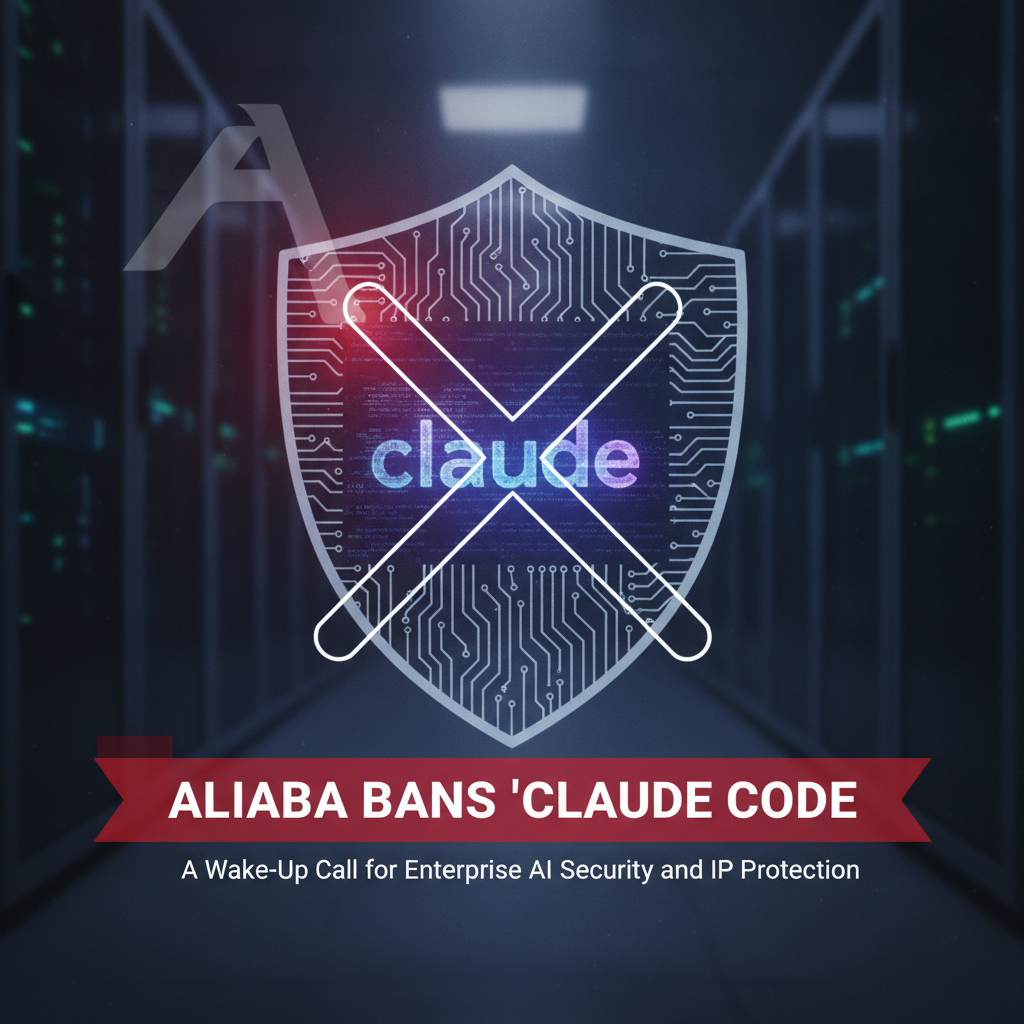
A significant ripple is reportedly spreading through the global tech landscape as Alibaba, the Chinese e-commerce and technology giant, has banned its employees from using ‘Claude Code’. While specifics remain under wraps, this reported move signals a growing apprehension among major corporations regarding the use of third-party AI tools for sensitive internal tasks, particularly those involving code generation and development. For businesses worldwide, Alibaba’s decision serves as a powerful reminder of the delicate balance between leveraging AI’s productivity benefits and safeguarding critical intellectual property and data security.
What is ‘Claude Code’ and Why is it Relevant?
‘Claude Code’ is understood to be an AI-powered coding assistant, likely an iteration or a specialized application derived from Anthropic’s Claude large language model (LLM). These sophisticated AI tools are designed to supercharge developer productivity by:
- Generating Code: Writing code snippets, functions, or even entire scripts based on natural language prompts.
- Debugging and Refactoring: Identifying errors, suggesting improvements, and optimizing existing code.
- Explaining Code: Helping developers understand complex or unfamiliar codebases.
- Automating Repetitive Tasks: Freeing up developers to focus on more complex problem-solving.
The allure of such tools for a company like Alibaba, with its vast developer base and complex technological infrastructure, is undeniable. However, their very nature – requiring interaction with and often inputting proprietary code – also presents substantial challenges.
The Core Concerns Behind Alibaba’s Reported Ban
While Alibaba has not officially commented on the reported ban, industry experts point to several critical concerns that would likely drive such a decision:
1. Data Security and Confidentiality
The most pressing issue is the potential for sensitive, proprietary code and project details to be inadvertently fed into external AI models. When employees use cloud-based AI tools, the data they input may be used to train and improve the AI model itself. This could mean:
- Leakage of Internal Information: Proprietary algorithms, project specifications, and strategic initiatives could become part of the public or widely accessible training data of the AI model.
- Compliance Risks: Violations of internal data governance policies, industry regulations (e.g., regarding personal data, financial information), and national security protocols.
2. Intellectual Property (IP) Protection
Alibaba invests massive resources into research and development, creating unique software and technological solutions that form the bedrock of its competitive advantage. Using third-party AI tools for code generation introduces significant IP risks:
- Ownership Ambiguity: Who owns the code generated by an AI? If an employee uses ‘Claude Code’ to write a critical piece of software, does Alibaba retain full, undisputed ownership, or could there be a claim from the AI provider or even other users if the code becomes part of a shared model?
- Trade Secret Vulnerability: Feeding unique coding patterns, solutions to complex problems, or novel architectural designs into an external AI could expose Alibaba’s trade secrets.
3. Lack of Control and Visibility
Unlike internal systems where data flows and usage can be strictly monitored, third-party cloud AI tools operate beyond a company’s direct control. This lack of visibility makes it impossible for companies to:
- Audit Usage: Understand exactly what data employees are inputting into these models.
- Enforce Policies: Consistently ensure that employees adhere to data handling and IP protection guidelines.
- Mitigate Risks Effectively: Respond quickly to potential breaches or misuse if they cannot track the activity.
4. Promoting Internal AI Solutions and Competitive Advantage
Like other tech behemoths, Alibaba is heavily invested in developing its own AI capabilities, such as its Tongyi Qianwen LLM. Banning external tools could also be a strategic move to:
- Encourage Adoption of Internal Tools: Direct employees towards Alibaba’s proprietary AI assistants, ensuring data remains within its secure ecosystem.
- Maintain a Competitive Edge: Prevent the inadvertent strengthening of external competitors’ AI models with Alibaba’s proprietary data.
Broader Implications for Enterprise AI Usage
Alibaba’s reported ban is not an isolated incident but rather a bellwether for the evolving landscape of enterprise AI governance. It highlights several critical challenges and trends:
- The Rise of ‘Shadow AI’: Employees, eager for productivity gains, are often adopting AI tools without official corporate approval, creating unseen security and IP risks.
- The Imperative for Clear AI Usage Policies: Companies can no longer ignore the proliferation of AI tools. They must develop and enforce clear, comprehensive policies on what tools are permitted, for what purposes, and with what data.
- Investment in Internal/Private LLMs: Expect an acceleration in companies developing or heavily customizing private, on-premise, or secure cloud-based LLMs and AI coding assistants that keep sensitive data within controlled environments.
- Enhanced Vendor Due Diligence: Businesses will need to conduct more rigorous security and privacy audits of third-party AI providers, scrutinizing their data retention policies, training data usage, and intellectual property terms.
- Balancing Innovation and Risk: The challenge for enterprises is to harness the immense potential of AI without exposing themselves to unacceptable levels of risk. This will require ongoing education for employees, robust technical controls, and adaptive governance frameworks.
Conclusion: A New Era for Corporate AI Governance
Alibaba’s reported ban on ‘Claude Code’ is more than just an internal corporate decision; it’s a significant indicator of the growing pains as the business world grapples with the pervasive influence of generative AI. It underscores the critical importance of robust AI governance, data security, and intellectual property protection in an era where AI tools are becoming indispensable. As more companies navigate this complex terrain, expect to see a more stratified approach to AI adoption – highly secure internal solutions for sensitive tasks, and carefully vetted, sandboxed external tools for less critical functions. The era of unfettered AI tool usage within enterprises is rapidly giving way to a more controlled, strategic, and security-conscious approach.
Leave a Reply