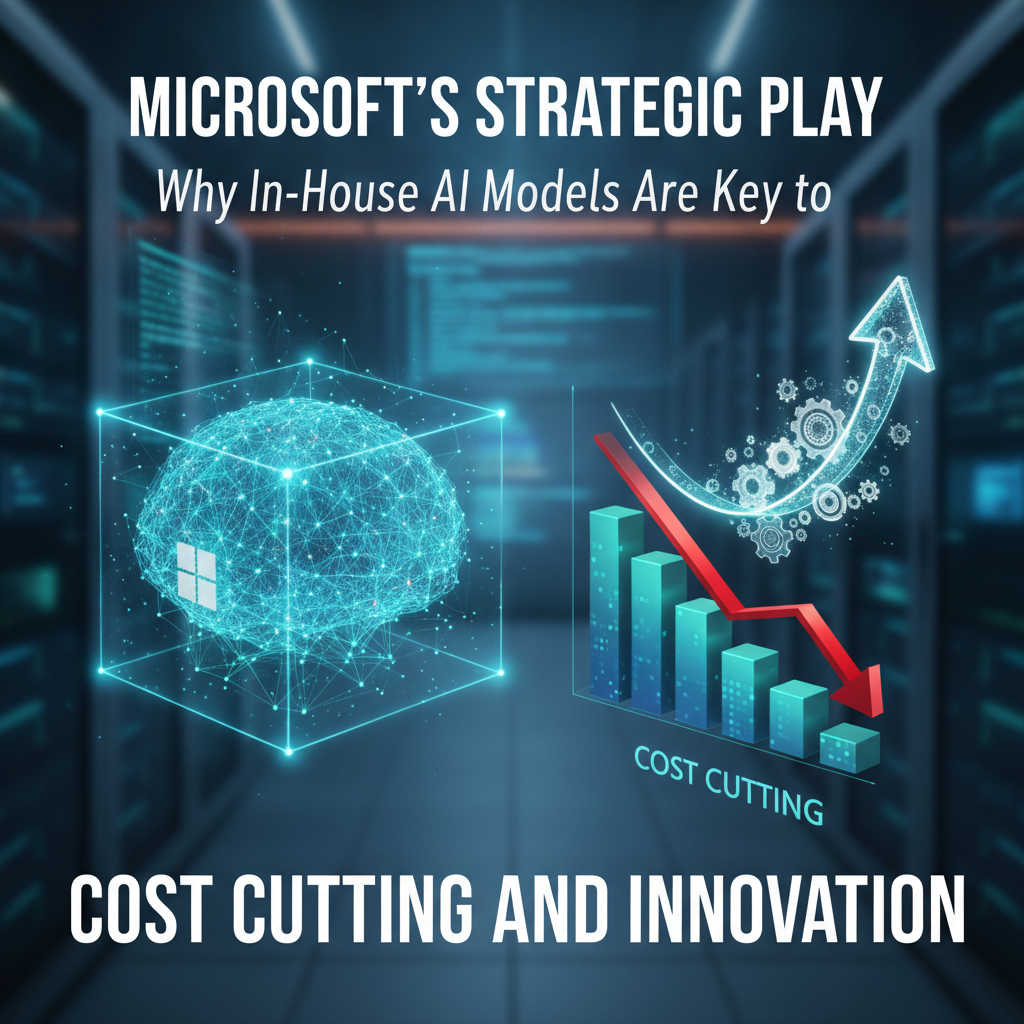
The artificial intelligence revolution is in full swing, driving unprecedented innovation and efficiency across industries. However, this transformative power comes with a significant price tag. From the astronomical compute costs of training large language models (LLMs) to the ongoing expenses of API calls and specialized cloud services, AI development and deployment can quickly become a major drain on resources. Recognizing this growing challenge, tech giant Microsoft is making a strategic pivot, doubling down on its own proprietary AI models to cut costs and maintain its competitive edge.
This move isn’t just about saving money; it signals a broader trend towards AI self-reliance and optimization that businesses of all sizes need to understand.
The Escalating Price Tag of AI Innovation
For many companies, the initial excitement around generative AI has been tempered by the reality of its operational costs. Relying heavily on third-party AI services, while convenient for rapid prototyping and initial deployments, can lead to escalating expenses as usage scales. These costs include:
- API Fees: Per-token or per-query charges for using external LLMs and other AI services.
- Compute Resources: The immense processing power required for training, fine-tuning, and even inference of complex AI models.
- Data Management: Storing, processing, and securing the vast datasets needed to feed AI models.
- Specialized Talent: The high demand for AI engineers, data scientists, and machine learning experts.
As AI becomes more integrated into core business functions, these expenses compound, prompting a critical re-evaluation of long-term AI strategies.
Microsoft’s Bold Pivot: Embracing Proprietary AI Models
Microsoft, a leader in both AI development and cloud computing (Azure), is uniquely positioned to address these cost challenges. By increasingly relying on its own internally developed and optimized AI models, the company aims to achieve greater efficiency and control over its AI expenditures. What does this mean in practice?
Instead of exclusively leveraging models from external providers or always running the largest, most general-purpose models, Microsoft is likely:
- Developing Custom Models: Building AI models specifically tailored for its internal needs and products, such as those powering Microsoft 365 Copilot, Bing, or Azure AI services.
- Optimizing Existing Models: Fine-tuning and distilling larger public models into smaller, more efficient versions that perform specific tasks without the overhead of their broader counterparts.
- Leveraging Proprietary Infrastructure: Running these models on its own highly optimized hardware and cloud infrastructure, allowing for more efficient resource allocation than external cloud providers might offer for specific tasks.
- Strategic Model Selection: Choosing the right-sized model for the right task, avoiding the ‘one-model-fits-all’ approach that can drive up costs.
This strategic shift allows Microsoft to keep more of its AI operations in-house, reducing reliance on external services and creating a more cost-effective, sustainable AI ecosystem.
The Core Benefits: Beyond Just Savings
While cost-cutting is a primary driver, the move to proprietary AI models offers several other significant advantages:
- Enhanced Control and Customization: In-house models can be precisely engineered and continually optimized to meet Microsoft’s specific performance, security, and ethical requirements. This means better integration with existing products and a more tailored user experience.
- Data Security and Privacy: Keeping more data processing and model inference within its own controlled environment enhances security and helps meet stringent data privacy regulations.
- Competitive Advantage: Developing unique AI capabilities that are not readily available to competitors fosters differentiation and strengthens Microsoft’s position in the AI landscape.
- Operational Efficiency: Streamlining the development-to-deployment pipeline for AI models reduces time-to-market and improves the agility of AI-powered features.
A Growing Industry Trend: The Move Towards AI Sovereignty
Microsoft’s decision is not an isolated incident; it reflects a broader industry trend where companies are seeking greater AI sovereignty. As AI matures, many enterprises are realizing the long-term strategic value of building and owning their core AI capabilities. This applies not only to tech giants but also to companies in finance, healthcare, manufacturing, and other sectors that recognize the need for:
- Long-Term Cost Predictability: Shifting from variable, usage-based external costs to more controllable internal investments.
- Strategic Independence: Reducing reliance on third-party vendors for critical AI components.
- Differentiated Solutions: Creating unique AI applications that offer a distinct market advantage.
What This Means for Your Business: Navigating the In-House vs. Cloud AI Debate
Microsoft’s strategy provides valuable lessons for other organizations. While not every company has the resources to build foundational models from scratch, the principle of optimizing AI costs and gaining more control is universally applicable. Businesses should consider:
- Evaluating Total Cost of Ownership (TCO): Beyond initial API costs, assess the long-term expenses of external AI services vs. a more in-house or hybrid approach.
- Identifying Core AI Needs: Determine which AI functions are strategic and mission-critical enough to warrant deeper internal investment.
- Exploring Fine-Tuning and Distillation: Instead of building from scratch, consider fine-tuning open-source or smaller proprietary models for specific tasks to achieve significant cost savings and better performance.
- Hybrid Approaches: Combining the flexibility of cloud AI services for non-core tasks with targeted in-house development for key strategic applications.
- Investing in AI Talent and Infrastructure: Building internal capabilities requires strategic investment in skilled personnel and the necessary computing infrastructure.
Conclusion: The Future of AI is Efficient and Strategic
Microsoft’s proactive move to rely more on its own AI models underscores a crucial turning point in the AI landscape. It highlights that sustainable AI adoption isn’t just about innovation; it’s about intelligent resource management and strategic independence. As AI continues to evolve, companies that master the art of cost-efficient AI development and deployment – whether through proprietary models, optimized cloud usage, or hybrid strategies – will be best positioned to unlock its full potential and drive the next wave of technological advancement.
Leave a Reply