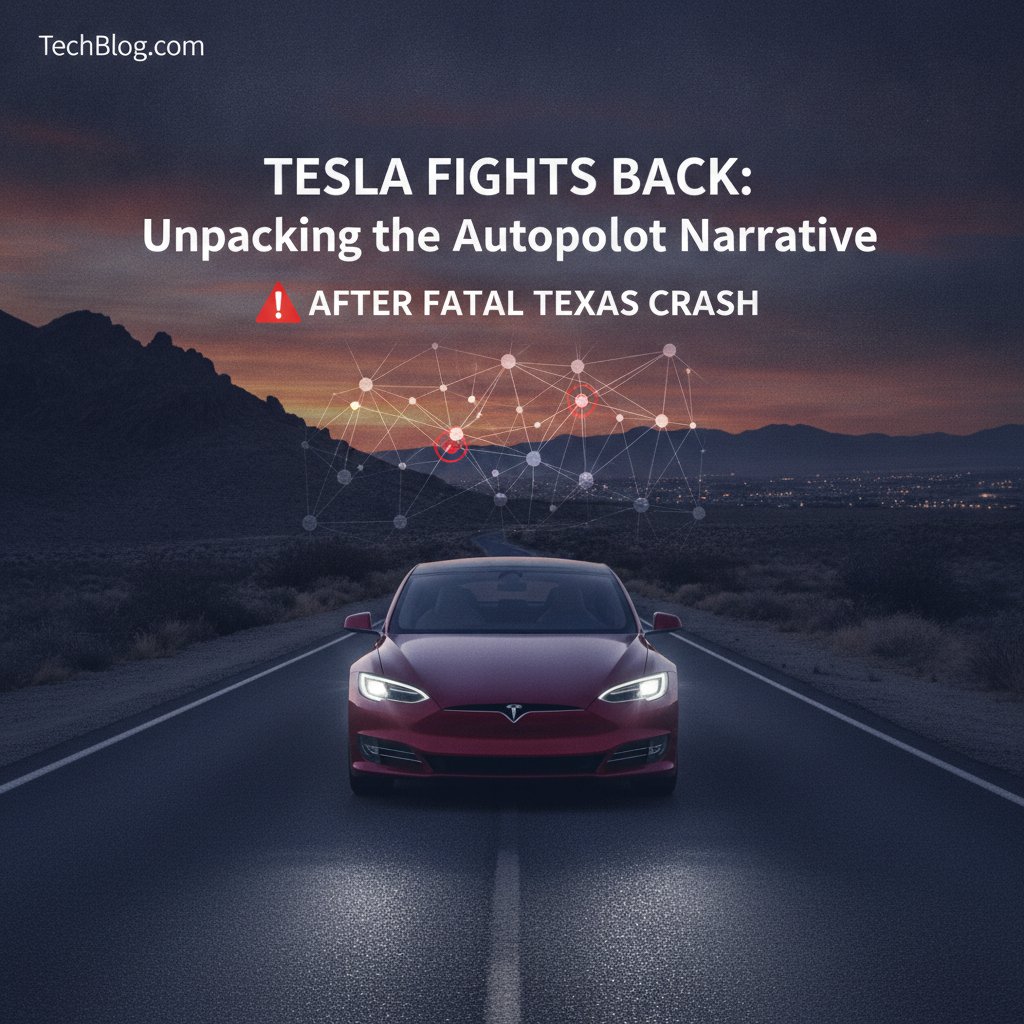
The world of autonomous driving is a crucible of innovation and intense scrutiny. Following a tragic fatal crash in Texas, Tesla finds itself once again at the forefront of this debate, vigorously pushing back against a prevailing narrative linking its Autopilot system directly to the incident. This post delves into the specifics of Tesla’s defense, the ongoing questions surrounding advanced driver-assistance systems (ADAS), and what this contentious battle for narrative control means for the future of self-driving technology.
The Texas Tragedy: A Catalyst for Autopilot Controversy
Details surrounding a recent fatal Texas crash involving a Tesla vehicle quickly sent shockwaves through the automotive and tech communities. Initial reports and public discussion swiftly pointed to Tesla’s Autopilot system as a potential factor, reigniting concerns about the safety and deployment of semi-autonomous driving features. Such incidents invariably thrust advanced driver-assistance systems into the spotlight, prompting urgent questions about their operational limits and the responsibilities of both the manufacturer and the driver.
Tesla’s Swift Counter-Narrative and Defense
In the wake of the Texas incident, Tesla has mounted a robust defense, actively challenging what it perceives as an inaccurate narrative. The company’s pushback typically involves a multi-pronged approach:
- Data Logs: Tesla frequently leverages detailed vehicle data logs to demonstrate whether Autopilot was actively engaged, and if so, under what specific conditions, often indicating that the system was not fully responsible or was misused.
- Driver Responsibility: A core tenet of Tesla’s argument is the emphasis on driver responsibility. Even with advanced systems like Autopilot, drivers are explicitly instructed to remain attentive and prepared to take control at all times.
- System Limitations: The company reiterates that Autopilot is an ADAS feature, not a fully autonomous system, with defined operational limitations that drivers must understand and respect.
This assertive stance highlights Tesla’s commitment to controlling the narrative around its technology, particularly as it faces increasing scrutiny from regulators and the public regarding Autopilot safety.
Autopilot vs. Full Self-Driving (FSD): A Crucial Distinction
A significant challenge in the public discourse is the frequent conflation of Autopilot with Tesla’s Full Self-Driving (FSD) Beta. It’s vital to understand the difference:
- Autopilot: An advanced driver-assistance system that includes Traffic-Aware Cruise Control and Autosteer. It assists with steering, accelerating, and braking within its lane but requires active driver supervision.
- Full Self-Driving (FSD) Beta: A more advanced suite of features designed to eventually enable the car to drive itself with minimal human intervention. However, even FSD Beta is still in a supervised testing phase and demands constant driver attention and readiness to intervene.
Misunderstanding these distinctions can lead to misuse and misguided public perception, contributing to the very narrative Tesla is striving to correct after incidents like the fatal Texas crash.
The Regulatory Lens: NHTSA and Beyond
Government agencies, notably the National Highway Traffic Safety Administration (NHTSA), are closely monitoring all incidents involving ADAS, including Tesla Autopilot crashes. NHTSA has ongoing investigations into various Tesla accidents, seeking to understand the role of the driver, the vehicle’s systems, and environmental factors. The outcome of these investigations significantly influences future regulations for autonomous vehicle safety and public policy, adding another layer of complexity to Tesla’s efforts to defend its technology.
Public Perception and Trust in Autonomous Technology
Incidents like the Texas crash profoundly impact public trust in autonomous driving technology. While proponents highlight the potential for significant reductions in accidents through automation, each high-profile incident erodes confidence. Tesla’s battle for narrative control is therefore not just about defending a single product; it’s about shaping the broader public acceptance and future adoption of self-driving cars globally. Transparency, consistent education, and verified safety data are paramount for building and maintaining this trust.
The Road Ahead: Evolution and Oversight
The fatal Texas crash and Tesla’s subsequent pushback underscore the profound complexities surrounding autonomous technology. As advanced driver-assistance systems become more prevalent, the debate around their capabilities, limitations, and the critical role of human drivers will only intensify. This ongoing dialogue is vital for fostering innovation while ensuring safety and building public confidence in the future of mobility. The evolution of autonomous features will undoubtedly be coupled with stricter regulatory oversight and an increasing demand for clear communication regarding what these systems can—and cannot—do.
Disclaimer: This article discusses a hypothetical news event based on the provided input. It aims to analyze potential SEO strategies for such a topic.
Leave a Reply