When the U.S. government announced restrictions on access to Anthropic’s latest AI models, the official narrative quickly centered on security concerns. Reports highlighted the possibility that advanced AI systems could be jailbroken, manipulated, or used to uncover software vulnerabilities. On the surface, the explanation sounded reasonable: powerful AI models can pose real risks if they fall into the wrong hands.
But the deeper story suggests the ban was never really about an AI jailbreak.
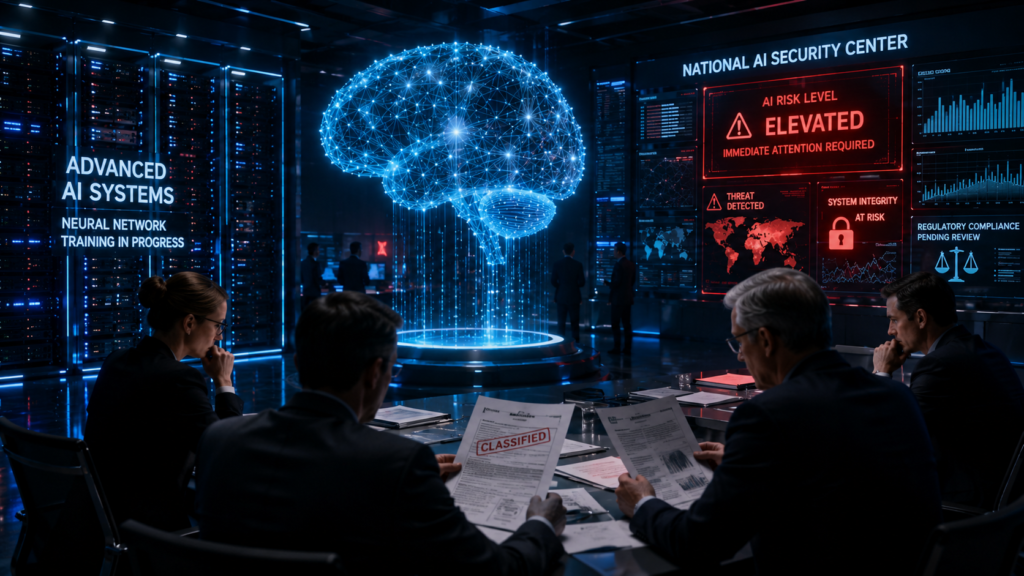
The jailbreak argument was always a weak foundation for such a significant policy decision. Every major frontier AI model—from OpenAI, Google, Meta, and Anthropic—has experienced jailbreaks in some form. Researchers regularly discover techniques that bypass safeguards, and companies continuously patch vulnerabilities as they emerge. If jailbreak susceptibility were the primary standard for government intervention, virtually every leading AI system would face similar scrutiny.
Instead, the controversy appears to be rooted in a broader debate about national security, technological leadership, and government control over increasingly capable AI systems.
As AI models become more powerful, governments are beginning to view them less like software products and more like strategic assets. Advanced language models can assist with cybersecurity research, scientific discovery, military planning, and intelligence analysis. The concern is no longer simply whether a model can generate harmful outputs after being manipulated. The concern is who gets access to these capabilities in the first place.
This shift mirrors earlier debates surrounding semiconductors and advanced computing hardware. Over the past several years, the United States has imposed export controls on cutting-edge chips, citing fears that rival nations could use them to accelerate military or intelligence programs. Frontier AI models are increasingly being treated under the same framework: not merely as commercial products, but as technologies with geopolitical significance.
Anthropic found itself at the center of this transition.
The company’s newest models reportedly demonstrated capabilities that raised concerns among policymakers about foreign access and dual-use applications. While public discussions focused on jailbreak risks and model misuse, many observers believe the real issue was whether advanced AI systems should be subject to stricter export controls and national-security oversight.
The timing also fueled skepticism. The restrictions arrived amid growing tensions between AI companies and regulators over transparency, safety testing, government partnerships, and compliance requirements. Against that backdrop, the jailbreak narrative looked less like the root cause and more like the most politically palatable explanation.
That doesn’t mean security concerns were fabricated. AI jailbreaks are real, and powerful models can undoubtedly be abused. But focusing solely on jailbreaks risks obscuring the larger policy debate now unfolding in Washington and other capitals around the world.
The fundamental question is no longer whether AI can be misused. Policymakers have largely accepted that it can. The question is whether the most advanced AI models should be treated as strategic technologies subject to government oversight, export restrictions, and national-security controls.
Viewed through that lens, the Anthropic restrictions make far more sense.
The ban was never primarily about a jailbreak. It was about power—who controls it, who can access it, and how governments intend to regulate one of the most transformative technologies of the century.
As AI capabilities continue to advance, similar conflicts are likely to become more common. The Anthropic episode may ultimately be remembered not as a security incident, but as an early sign that governments have begun treating frontier AI as a matter of national strategy rather than just another software product.
Leave a Reply